Tuesday, July 31, 2012

Court Throws Out Government Claim for Excess Reprocurement Costs

By: Edward T. DeLisle

If a government agency terminates a construction contractor for default, it cannot then sit on its hands. The agency must re-procure and complete that project within some reasonable amount of time. Failure to do so may result in the dismissal of any subsequent claim for excess costs to reprocure and finish the work. That was one of the very important messages delivered by the Court of Federal Claims last month in M.E.S., Inc. and Traveler’s Casulty & Surety Company of America v. The United States.

In September of 1998, the United States Postal Service (USPS) retained MES to build a new postal facility for it at a cost of $3,954,000. Prior to completion of the work, the USPS terminated plaintiff for failure to timely perform. The contractor disputed the termination, taking the position that defective plans and specifications prevented timely performance. While the parties attempted to amicably resolve their differences, their efforts failed, requiring the USPS to reprocure. The termination was issued on June 2, 1999.

The USPS did not reprocure until April 26, 2004, almost five years later. When questioned about the reason why it took so long to reprocure, the Contracting Officer for the USPS merely stated that there was “no reason” for the delay. In the meantime, the costs of completion escalated due to site deterioration, changes in the applicable construction codes and postal department standards, as well as certain “betterments” that the USPS desired upon reflection five years later. While, as part of its excess cost calculation, the agency’s experts attempted to eliminate certain costs that could not have reasonably been assessed to the defaulted contractor, the Court determined that the undue delay in reprocurement eliminated the USPS’s ability to demand any excess costs. Those costs were initially identified as $803,909 and later adjusted to $727,707.

In her opinion, the judge specifically stated that “a claim for excess reprocurement costs must be dismissed where an agency unreasonably delayed reprocurement and if that delay resulted in higher costs or otherwise prejudiced the contractor.” All of these elements were present in MES. Moreover, the USPS made no attempt to explain the basis for the delay, or rebut evidence provided by the contractor that the delay was unreasonable. For these reasons, the court threw out the government’s claim.

If anyone is interested in how not to properly terminate and then complete a project, I encourage you to read this opinion. As the court made a number of interesting rulings, stay tuned for more on MES.

Edward T. DeLisle is a Partner in the firm and a member of the Federal Contracting Practice Group.


Source: http://feeds.lexblog.com/~r/FederalConstructionContractingBlog/~3/eJQ1E52PPFw/

Columbia electrician electrician Columbia electrician in Columbia electrician Columbia VA electrician in Columbia VA

Energy Efficient Curtains and Blinds

--Thermal insulated window treatments act as a similar energy efficient retrofit as low E window films.

In a recent post, the use of low E residential window films was discussed as a viable opportunity to reduce solar heat gain.  Solar heat gain is perhaps one of the largest contributors to high cooling costs in warmer months.  In addition, UV rays entering your house can cause furniture to be destroyed.  There are plenty of undeniable reasons why solar heat gain can be devastating to a home's ability to be energy efficient; the question is what can be done to reduce or prevent it?

If low E residential window films don't seem to be a practical solution, or if you are looking for additional protection against solar heat gain, one should consider the use of energy efficient curtains or blinds. 

Mostly all windows in a home or office that look directly into occupied spaces need curtains or blinds for privacy at night and to shade the interior when not as much direct sunlight is desired.  When shopping for curtains and blinds for these instances consider options that use liners or materials that reject UV rays that cause solar heat gain and damage your furnishings.  Here are some great selections that are stylish and energy efficient. 

Thermal Insulated Blackout Curtain
by Best Home Fashion
$64.99

These curtains come in a variety of colors and are sold in pairs at 84 inch length and feature a sleek, contemporary look with solid grommet top fittings that slip right over any standard or designer curtain rod.  Laboratory testing concludes that these curtains will block 100% of UV rays and will insulate against heat and cold.  Also available in 63" length for $59.99.

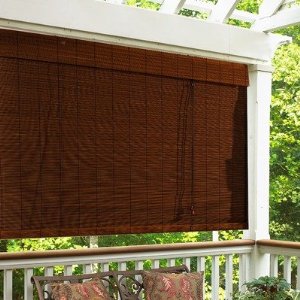
Imperial Matchstick Bamboo Roll-up Blinds(30 x 72)
by Radiance
$31.97

These indoor/outdoor blinds filter harmful UV rays, offering energy efficient insulating qualities.  Use these blinds on your windows and notice a decrease in your home or office's energy demands.  Also available in 36" and 48" widths.

Source: http://www.sustainableconstructionblog.com/renovations/energy-efficient-curtains-and-blinds

electrician Columbia electrician in Columbia electrician Columbia VA electrician in Columbia VA Columbia electrician

When Certifying a Claim is Required, Do Yourself a Favor...Don't be Creative

By: Edward T. DeLisle & Maria L. Panichelli

When it comes to problem-solving, we are often encouraged to “think outside the box.” The idea is to be creative; to look beyond the norm. Well, when it comes to certifying a claim, you’re probably better off simply doing what the FAR tells you to do. The Civilian Board of Contract Appeals made this point clear in URS Energy & Construction v. Dept. of Energy.

As most contractors are aware, all claims over $100,000 must be accompanied by a certification. FAR § 33.207(a). FAR §33.207(c) sets forth the exact language that such a certification must contain. That language is as follows:

“I certify that the claim is made in good faith; that the supporting data are accurate and complete to the best of my knowledge and belief; that the amount requested accurately reflects the contract adjustment for which the Contractor believes the Government is liable; and that I am duly authorized to certify on behalf of the Contractor.”

In URS Energy & Construction, the contractor certified its claim to the Department of Energy using language that differed from the FAR:

“I certify that this invoice is correct and in accordance with the terms of the contract and that the costs incurred herein have been incurred, represent the payments made by the Contractor except as otherwise authorized in the payments provision of the contract, and properly reflect the work performed.”

The government asked the CBCA to dismiss the contractor’s claim on the basis that the certification used was defective, thereby depriving the CBCA of subject matter jurisdiction over the claim.

In ruling on the motion, the CBCA noted that “technical” defects in a certification can be cured; however, “[i]f the certification is made with intentional, reckless or negligent disregard for the applicable regulation, it is not correctable.” The CBCA found that the contractor’s claim was made with “intentional, reckless or negligent disregard” because the contractor wholly failed to include a certification that “the claim is made in good faith,” or that “the supporting data [was] accurate and complete to the best of [the contractor’s] knowledge and belief.” Moreover, the certification failed to include a statement that the person signing the certification was duly authorized to certify the claim on behalf of the contractor. Accordingly, the CBCA dismissed the case.

The lesson: certifying a claim is not the time to be creative. The language in FAR §33.207(c) must be reviewed carefully and, unless there is very good reason to diverge from what is identified therein, you are better off simply incorporating it verbatim into your claim. If you cannot attest to those issues required by the FAR, you should think twice about filing a claim at all, for submitting a defective certification, which is true, is far better than submitting a false certification. That is something you should avoid at all costs.

Edward T. DeLisle is a Partner in the firm and a member of the Federal Contracting Practice Group. Maria L. Panichelli is an Associate in the firm’s Federal Practice Group.

Source: http://feeds.lexblog.com/~r/FederalConstructionContractingBlog/~3/aDNU5qHRsX4/

electrician in Columbia VA Columbia electrician electrician Columbia electrician in Columbia electrician Columbia VA

Call for Entries: Construction Marketing STAR? Awards

The annual Construction Marketing STAR? awards and the new Construction Marketer of the Year? Awards honor marketing excellence of construction industry professionals. The awards are sponsored by the Construction Marketing Association with early entry deadline of September 7, 2012. The Construction Marketing STAR? Awards recognize the best marketing across sixteen categories (78 sub-categories) including advertising, [...]

Source: http://constructionmarketingblog.org/call-for-entries-construction-marketing-star-awards/

electrician Columbia VA electrician in Columbia VA Columbia electrician electrician Columbia electrician in Columbia

Contracting with the Federal Government? Get ready to say hello to your new "Uncle" SAM!

 By: Joseph A. Hackenbracht

Federal contractors need to prepare for another change in the online environment. Currently scheduled to take place in late July of this year, the Central Contractor Registration (CCR) system will no longer exist. The Federal government is starting a new registration system called the System for Award Management, or SAM [Uncle, get it?] for short. In addition to replacing CCR, SAM will incorporate the Federal Agency Registration [FedReg], the Online Representations and Certifications Application [ORCA], and the Excluded Parties List System [EPLS]. For all those contractors already registered in CCR and ORCA, you can breathe a sigh of relief; the Federal government is going to transfer your information into the new system. Although some of the terminology is changing, enough has remained the same that SAM should be familiar, so when the time comes for a contractor to renew its registration, it will not have too much trouble. For more information, go to the website.  A quick introduction to the new system is attached.

The government, however, is not through with its centralization of procurement information. Contractors familiar with the FedBizOpps system for reviewing solicitations, amendments, and other procurement actions can look forward to it being incorporated into SAM, along with the PPIRS, Past Performance Information Retrieval System, and many other data sites.

That’s life in the digital age, changing so quickly that it is hard to know whether you’re coming or going.

Joseph A. Hackenbracht is a Partner in the firm and a member of the Federal Contracting Practice Group.
 

Source: http://feeds.lexblog.com/~r/FederalConstructionContractingBlog/~3/OUlPm5CiBE4/

electrician Columbia VA electrician in Columbia VA Columbia electrician electrician Columbia electrician in Columbia

Monday, July 30, 2012

Developers Must Pay Prevailing Wages for Privately Financed Public Infrastructure

By Bram Hanono and Greg Woodard

California Labor Code sections 1720 et seq. (the Prevailing Wage Law) ("PWL") require employers (including developers and contractors) engaged in public works projects to pay the prevailing wage to their employees if the project is "paid for in whole or in part out of public funds." The Second Appellate District Court of Appeal recently ruled that private developers must pay prevailing wages for the construction of all public improvements in connection with a development project if public funds are used to finance any part of the public improvements, even if the remaining public improvements are paid for with private funds. The California Supreme Court declined to hear the developer's appeal. Therefore, developers and contractors could face increased project costs as a result of this case.
 

Background & Summary

In Azusa Land Partners v. Department of Industrial Relations, 191 Cal.App.4th 1 (2010), the developer proposed a master planned 500+ acre development that included up to 1,200 homes, 50,000 square feet of commercial, and public infrastructure and improvements. To obtain the City of Azusa's approval, the developer agreed to public infrastructure and improvement work, including construction of a public school and park, freight under-crossings, sanitation district facilities, and street, bridge, storm drain, sewer, water, utilities, park and landscaping improvements. The public improvements were to be funded by Mello-Roos bonds which were approved for indebtedness of up to $120 million to be incurred by the Community Facilities District ("CFD"). The developer was required to construct the public improvements even if the actual costs exceeded the amount of bond funds sold by the CFD for the improvements. The total cost of the public improvements was approximately $146 million but the CFD only sold $71 million in bonds, leaving the developer on the hook for the remaining $75 million.

A third party requested an inquiry into whether the entire project was a "public work" subject to the PWL. "Public works" is broadly defined by the PWL and includes work "paid for in whole or in part out of public funds." The Department of Industrial Relations (the "Department"), which was charged with the review, determined that even though the project was only partly funded with public funds, the entire project was nevertheless a public work and subject to the PWL. However, the Department also found prevailing wage did not have to be paid on the entire project because the project met an exemption in the PWL (Labor Code section 1720(c)(2)) that required prevailing wage only for those public infrastructure improvements in the project required as a condition of regulatory approval. Accordingly, the developer had to pay prevailing wage for all those public improvements even though some were in fact privately funded due to the shortfall in CFD funding. The developer appealed, but the Department upheld its initial determination, meaning prevailing wage had to be paid for all of the public improvements.

The developer filed a petition for writ of mandate in superior court and the trial court denied the petition. On appeal, the developer argued it should only be required to pay prevailing wage for the public improvements actually financed with the Mello-Roos bond proceeds and not for privately funded infrastructure improvements for which no bond proceeds were received – the developer was seeking a more narrow interpretation under section 1720(c)(2) of the PWL.

The Court of Appeal disagreed with the developer. First, the court held that under the PWL, the entire project was a "public work" because the project was funded in part through public funds. Second, the court held that under the PWL, the Mello-Roos bond proceeds constituted public funds. Finally, the court rejected the developer's argument that even if the project was subject to the PWL, it should only be required to pay prevailing wage for the public improvements that were built with Mello-Roos bonds, and not any public improvements constructed at private expense. Instead, the Court of Appeal agreed with the Department and the trial court, interpreting the PWL to apply to all public improvements, regardless of whether or not they were paid for with Mello-Roos bonds.

On March 2, 2011, the California Supreme Court declined to hear the developer's appeal. As a result, the developer will be required to pay prevailing wage on the entire $146 million cost for the project's public improvements, including the $75 million in public improvements which it privately financed.

Comment

Going forward, developers and contractors may be required to pay prevailing wage on the entire build-out of public improvements, even if the development is mostly privately financed and privately owned. This means each party should carefully determine in their development and construction contracts whether prevailing wage rules apply and which party will pay the increased costs.

Authored By:

Bram Hanono & Gregory E. Woodard

Source: http://feeds.lexblog.com/~r/ConstructionInfrastructureLawBlog/~3/PO8gCqFoawE/

electrician Columbia electrician in Columbia electrician Columbia VA electrician in Columbia VA Columbia electrician

Arbitrators can decide validity of arbitration provision in construction contracts

By Edward Lozowicki and Robert Sturgeon
 

Binding arbitration of construction disputes is frequently required by standard industry contracts. For example, the contract forms published by the American Institute of Architects either require or provide an option for arbitration under the Construction Industry Rules of the American Arbitration Association ("AAA"). The latter rules authorize the arbitrator to decide whether the contractual arbitration agreement is enforceable. (See, e.g. Rule 9 of AAA Construction Industry Rules). However some courts have decided this issue should be determined by the courts, rather than the arbitrator.
 

But a recent Supreme Court decision determined that an arbitrator can decide enforceability issues if the arbitration clause expressly provides such authority, similar to the AAA Rule 9. In Rent-A-Center West, Inc. v. Jackson, the United States Supreme Court held in a 5-4 decision that under the Federal Arbitration Act ("FAA"), a contractual arbitration clause which "clearly and unmistakably" delegates to the arbitrator the authority to determine the validity of the arbitration agreement is enforceable and binding on the parties, and that the issue is not to be decided by the court. In doing so, the Supreme Court reversed the prior ruling of the Ninth Circuit Court of Appeals, which had held that it is for the court and not the arbitrator to decide whether the arbitration agreement is valid and enforceable in the first instance. 130 S. Ct. 2772, 177 L. Ed. 2d 403 (2010)

Plaintiff Jackson was a former employee of Rent-A-Center who had sued for employment discrimination under state and federal law. In the course of his employment, Jackson and Rent-A-Center had signed a Mutual Agreement to Arbitrate Claims ("Agreement") which stated called for arbitration of all disputes arising out of Jackson's employment. The Agreement also provided that the "Arbitrator, and not any federal, state or local court or agency, shall have exclusive authority to resolve any dispute relating to the interpretation, applicability, enforceability or formation of this Agreement including . . . any claim that all of part of this Agreement is void or voidable." The trial court ruled that based on the Agreement, it was for the arbitrator to decide whether the agreement was unconscionable and unenforceable, and therefore ordered that the case proceed in arbitration rather than court. On appeal the Ninth Circuit reversed and ruled that, as the plaintiff contended he did not consent to the contract as a whole, the question of whether he consented to the arbitration agreement contained within the contract was a question for the court, not the arbitrator.

In reversing the decision of the Ninth Circuit, the majority of the Supreme Court focused on its prior decision in Prima Paint Corp. v. Flood & Conklin Mfg. Co., 388 U.S. 395, 87 Sup. Ct. 1801, 18 L.Ed.2d 1270 (1967). In Prima Paint, the Court had held that under § 2 of the FAA, an arbitration agreement in a contract is "severable" and may be enforced by a federal court even if the balance of the contract is unenforceable. In Rent-A-Center, the majority relied on Prima Paint to focus its inquiry on the procedural issues in the case. The Court emphasized that Jackson had challenged the contract as a whole on the ground that it was unconscionable, but that he had not raised a specific challenge in the trial court to agreement allowing the arbitrator rather than the court to decide whether the arbitration provision was enforceable. It further relied on the fact that Jackson's reasoning for why the contract was unconscionable focused on the contract as a whole, and that Jackson did not specify grounds as to why the specific agreement to delegate the decision to the arbitrator was unconscionable.

The Court explained that although "agreements to arbitrate are severable," that "does not mean that they are unassailable. If a party challenges the validity under § 2 of the precise agreement to arbitrate at issue, the federal court must consider the challenge before ordering compliance with that agreement under § 4" of the FAA. 130 S. Ct. 2778. The Court then noted that the "District Court correctly concluded that Jackson challenged only the validity of the contract as a whole," not specifically the validity of the agreement to allow the arbitrator to decided the validity of the agreement. 130 S. Ct. at 2779. Jackson had argued that fee-sharing procedures and discovery limitations in the agreement rendered it unconscionable. But the Court concluded that because "Jackson . . . did not make any arguments specific to the delegation provision; [but instead] he argued that the fee-sharing and discovery procedures rendered the entire Agreement invalid," his challenge was procedurally insufficient to invoke federal court review of the enforceability of the delegation provision. 130 S. Ct. at 2780.

Many construction contracts involve use of materials purchased in interstate commerce, and the FAA is therefore often applicable to arbitration provisions in such contracts, Allied Bruce Terminix Cos. Inc. v. Dobson, 513 U.S. 265, 115 S. Ct. 834 (1995). Contractors and developers who wish to preserve the right to judicial review of the enforceability of an arbitration delegation provision should first ensure the language of the contract is clear that the court and not an arbitrator is to decide issues of enforceability of the arbitration agreement. On the other hand, if a party wishes to challenge such an agreement, it must be careful to satisfy the procedural requirements. First, it must raise a specific challenge to the agreement to allow the arbitrator to decide the validity of the contract, not merely a challenge the general enforceability of the contract as a whole. Second, the party must support the challenge with reasons why the agreement to allow the arbitrator to decide the issue is unconscionable (or otherwise invalid), not merely reasons why the contract as a whole is unconscionable.

Authored By:

Edward Lozowicki and Robert Sturgeon

Source: http://feeds.lexblog.com/~r/ConstructionInfrastructureLawBlog/~3/y8jl0Bs_1Xw/

electrician Columbia electrician in Columbia electrician Columbia VA electrician in Columbia VA Columbia electrician

The Year 2010 In Review: Design And Construction Defects Litigation

This article is the first in a series summarizing construction law developments for 2010.

By Candace Matson, Harold Hamersmith & Helen Lauderdale

1. Centex Homes v. Financial Pacific Life Insurance Co., 2010 U.S. Dist. LEXIS 1995 (E.D. Cal. 2010)
 

After settling numerous homeowners' construction defect claims – and more than ten years after the homes were substantially completed – a home developer brought suit against one of the concrete fabrication subcontractors for the development seeking indemnity for amounts paid to the homeowners, as well as for damages for breach of the subcontractor's duties to procure specific insurance and to defend the developer against the homeowners' claims. The subcontractor brought a motion for summary adjudication on the ground the developer's claims were barred by the ten year statute of repose contained in Code of Civil Procedure Section 337.15.
 

The District Court agreed the developer's claim for indemnity was barred by Section 337.15. And it held that because the damages recoverable for breach of the subcontractor's duty to purchase insurance are identical to the damages recoverable through the developer's indemnity claim, the breach of duty to procure insurance claim also was time-barred. The District Court, however, allowed the claim for breach of the duty to defend to proceed. The categories of losses associated with such a claim (attorneys' fees and other defense costs) are distinct from the damages recoverable through claims governed by Section 337.15 (latent deficiency in the design and construction of the homes and injury to property arising out of the latent deficiencies).
 

2. UDC – Universal Development v. CH2M Hill, 181 Cal. App. 4th 10 (6th Dist. Jan. 2010)


Indemnification clauses in construction agreements often state that one party to the agreement – the "indemnitor" – will defend and indemnify the other party from particular types of claims. Of course, having a contract right to a defense is not the same as actually receiving a defense. Any indemnitor attempting to avoid paying for defense costs can simply deny the tender of defense with the hope that when the underlying claim is resolved the defense obligations will be forgotten. In the past, when parties entitled to a defense – the "indemnitees" – had long memories and pressed to recover defense costs, indemnitors attempted to justify denying the tender by claiming their defense obligations coincided with their indemnity obligations and neither arose until a final determination was made that the underlying claim was one for which indemnity was owed.

The California Supreme Court rejected this justification for denying an immediate defense obligation in Crawford v. Weather Shield, 44 Cal. 4th 541 (2008). And in UDC – Universal Development vs. CH2M Hill, 181 Cal. App. 4th 10 (2010), the Sixth District Court of Appeal followed the Supreme Court's lead, repeating that the right to a defense is separate and distinct from the right to indemnity under a typical indemnity clause, the right arises immediately upon assertion of a claim, and the right exists regardless of whether the claim is ultimately proven.

UDC was the developer of a condominium project. It contracted with CH2M Hill to provide engineering and environmental planning services for the project. Their agreement called for CH2M Hill to indemnify UDC for all claims "that arise out of or are in any way connected with any negligent act or omission" of CH2M Hill. It also required CH2M Hill to provide UDC with a defense to any action brought on any claim covered by the indemnity obligation. After the project was completed, the homeowners' association filed suit against UDC for defective conditions at the project due in part to negligent planning and design of open spaces and common areas. The complaint did not attribute negligence to any particular subcontractor but instead contained general allegations of deficient services by architects, engineers, and consultants.

UDC filed a cross-complaint for equitable, comparative, and express contractual indemnity against numerous subcontractors on the project, including CH2M Hill. It also tendered the defense of the homeowners' association's lawsuit to all cross-defendants. CH2M Hill declined the tender. UDC succeeded in settling all of the cross-claims except those asserted against CH2M Hill.

At trial, the parties agreed the jury would decide the factual issues of negligence and breach of contract and the court thereafter would apply the contract's indemnity provisions. The jury concluded CH2M Hill had not been negligent and had not breached its contract with UDC. With these favorable conclusions in hand, CH2M Hill argued to both the trial and appellate courts that it had no duty to defend UDC. According to CH2M Hill, such a duty could only arise after a finding that CH2M Hill had been negligent.

Both the trial and appellate courts rejected CH2M Hill's argument. Instead, they ruled that a duty to defend is separate from a duty to indemnify, and the duty to defend necessarily occurs before the duty to indemnify arises and before any negligence determination is made. CH2M Hill also unsuccessfully urged the courts that it owed no duty to defend the developer because the homeowners' association's complaint did not specifically allege that CH2M Hill was negligent. The appellate court concluded that the developer's right to a defense did not turn on whether the plaintiff named a particular subcontractor in its complaint. The plaintiff's general allegations of deficient design services by engineers for the project, together with the developer's cross-complaint for indemnity attributing responsibility to CH2M Hill for the plaintiff's damages, were sufficient to trigger CH2M Hill's duty to defend.

The UDC and Crawford decisions eliminate any lingering uncertainty about when the obligation to provide a defense arises: under a typically worded indemnity clause, the duty to defend requires immediate action by an indemnitor after the defense of a claim is tendered. But whether these decisions will alter real world conduct by indemnitors and result in their taking an active responsibility for the defense of claims from the outset is far less certain.
 

3. Great Lakes Construction, Inc. v. Jim Burman, et al., 186 Cal. App. 4th 1347 (3d Dist. July 2010)
 

After a homeowner posted unfavorable comments about two contractors on the internet, the contractors sued the homeowner for libel. The contractors' complaint prompted a predictable series of pleadings, starting with the homeowner's cross-complaint for breach of contract and negligence against the contractors and designers for substandard work, followed by the contractors' cross-complaint against one of its subcontractors for breach of contract and indemnity. In the ensuing litigation, the homeowner and subcontractor were represented by the same attorney. The contractors successfully moved to disqualify the lawyer for the homeowner and subcontractor based on the conflict that existed in the lawyer's joint representation of them. The Court of Appeal reversed. No legally protected interest of the contractors was violated by the joint representation of their opponents by a single lawyer; the lawyer owed the contractors no duty of loyalty. Therefore the contractors did not have standing to seek the lawyer's disqualification.

Authored By:

Candace L. Matson is a partner in Sheppard Mullin's Los Angeles office where she specializes in construction law.  Harold E. Hamersmith is a partner in the firm's Los Angeles office specializing in design and construction contracts, claims, and defects litigation, and public contract law.  Helen J. Lauderdale is a special counsel specializing in construction litigation in Sheppard Mullin's Los Angeles office.

Source: http://feeds.lexblog.com/~r/ConstructionInfrastructureLawBlog/~3/dR4jSnA0bCA/

electrician in Columbia electrician Columbia VA electrician in Columbia VA Columbia electrician electrician Columbia

The Year 2010 In Review: Public Works Projects

This article is the fifth in a series summarizing construction law developments for 2010.

By Candace Matson, Harold Hamersmith & Helen Lauderdale

A. Bidding

  1. Great West Contractors Inc. v. Irvine School District, 187 Cal. App. 4th 1425 (4th Dist. Aug. 2010)

In Great West Contractors, the Fourth District held that a public agency's rejection of a bid for a public works project on the basis that a corporate bidder did not list its officers' licenses is a question of bidder responsibility, not bid responsiveness, and therefore a due process hearing was required. The Court of Appeal said that the case is important for two reasons. First, it presents a challenging problem in public contracting law: how to distinguish a "non-responsive" bid from a de facto determination that the bidder is not a "responsible" bidder. Second, the case presents what the court called "an object lesson in how evidence that, at least on its face, tends to show favoritism – indeed, on this record, favoritism most foul – never got squarely presented to, or considered by, the trial court." The Court invited readers of the opinion to judge for themselves whether "stonewalling" might not be a better word than "delay" for describing the public agency's actions.
 

The School District sought bids for the renovation of two elementary schools. All bidders were pre-qualified. Plaintiff, Great West Contractors, submitted the lowest bid on each project. Nonetheless, its bid was rejected as non-responsive. In response to the question in the bid package, "Have you ever been licensed under a different name or license number?" Great West responded "No." The School District subsequently determined that Great West had in fact operated under different license numbers and its president was listed as an RME under a different license number, and on that basis the School District determined that Great West's bid was non-responsive and it was therefore rejected in its entirety. The way by which this came about is what provoked the court's "favoritism most foul" comment. The Court related that a competing bidder, for a reason never adequately explained by the public agency, had access to Great West's bid information within 24 hours of the opening of all bids. Thus, the competitor was able to present a bid challenge almost immediately to the School District based on the allegation that Great West had omitted to disclose some licenses with which it or its principals had been associated. And that competing bidder went on to be awarded one of the contracts. But when Great West tried to get a copy of that very same competitor's bid, the School District did not turn over that information until several weeks later – indeed, the information was deliberately not made available until after the critical first court hearing in the case. And then, when Great West finally did get the information on its competitors' bids, it discovered that its successful competitors had been guilty of the very same omission with regard to the disclosure of all associated licenses that was the ostensible reason that Great West's bid was summarily rejected in the first place.

Great West filed a petition for writ of mandate generally arguing that it should have received the contract award. After two hearings, the trial court held that Great West's bid was non-responsive, and even if Great West had a due process right to a hearing due to its non-responsiveness, any relief would be moot inasmuch as the work had already begun and Great West could no longer be awarded the contracts at issue. Additionally, the trial court entered judgment against Great West.

The Court of Appeal ruled first that, although the projects were already completed, the question presented on appeal – whether plaintiff's failure to list its officers' licenses constituted an issue of bid responsiveness or bidder responsibility – was not moot. The work was already complete, and the School District argued that therefore a court should not decide the propriety of its rejection of Great West's low bid. The Court of Appeal reasoned, however, that the non-responsive vs. non-responsible issue presented is "a classic example of an issue capable of repetition yet likely to evade review. Consider: in public contracts of a short lead-time nature, like the one here, an initial determination by the public agency that the lowest bid is 'non-responsive' allows for a summary rejection of that bid that may readily preclude effective judicial redress."

The Court of Appeal added that the issue is of great public concern. A school district is legally required to award contracts to the lowest responsible bidder. This statutory mandate may be bald-facedly circumvented if the school district need simply declare the bid non-responsive, then award the contract to the next (and perhaps favored) bidder.

The court then went on to address the merits of the case, discussing the difference between non-responsibility and non-responsiveness. The Court cited, inter alia, the Taylor Bus Service case which stated that responsibility is a "complex matter dependent, often, on information received outside the bidding process and requiring, in many cases, an application of settled judgment, whereas responsiveness is "less complex" and "can be determined from the face of the bid." The Court ultimately held that the allegation of falsity with respect to Great West's response to the bid question made it clear that the School District's rejection of its bid was an issue of non-responsibility, not non-responsiveness. The Court of Appeal reversed the judgment below, finding that the School District had erred in rejecting Great West's bid without allowing it a hearing on the issue of responsibility, and further finding that the trial court had incorrectly denied Great West the opportunity to amend its claim to seek damages (bid preparation costs) consistent with Kajima/Ray Wilson v. Los Angeles County Metropolitan Transportation Authority, 23 Cal. 4th 305 (2000).

  1. Schram Construction Inc. v. Regents of University of California, 187 Cal. App. 4th 1040 (1st Dist. Sept. 2010)

The Regents of the University of California awarded a general contract to DPR Construction for the design and construction of a medical center. On the University's behalf, DPR solicited bids for the mechanical, plumbing and electrical work on the project. Subcontractors were invited to bid on six individual packages and three alternative combination packages. After learning which subcontractors had bid on each package, DPR and the University decided to award a contract on a certain combination package instead of two individual packages. Southland Industries was determined to be the lowest responsible bidder on the combination package. Plaintiff, Schram Construction, which had submitted bids on the two individual packages but not on the combination package, filed a petition for writ of mandate challenging the award of the contract to Southland. The trial court denied Schram's petition.

The Court of Appeal reversed, concluding that the University's bid package selection procedure violated Public Contract Code Section 10506.4(c) – which requires it to "adopt and publish procedures and required criteria that ensure that all selections are conducted in a fair and impartial manner" and to disclose to prospective bidders how the best value bid will be selected, including the bid selection procedure and the determinative factors in that decision -- where it selected the bid packages based on undisclosed criteria and in a manner that allowed it to predetermine the outcome of the bid selection. The Court held that section 10506.4 required publication of the bid package selection criteria and that publication was necessary to a fair and impartial bid selection. The Court was particularly concerned that the bid selection had turned on a criterion that had not even been disclosed to the bidders. In concluding that the contract with Southland must be set aside, the Court stated that the University's violations of the competitive bidding statutes were not merely "technical or non-substantive," and that they compromised the integrity of the selection process by failing to ensure procedural and substantive fairness.

  1. Graffiti Protective Coatings, Inc., et al. v. City of Pico Rivera, 181 Cal.App. 4th 1207 (2d Dist. Feb. 2010)

Through competitive bidding, plaintiff had been awarded a public works contract to maintain a city's bus stops. Four years later, the City terminated the contract as allowed by its terms. Without inviting competitive bids in accordance with Public Contract Code sections 20161 - 20162, the City entered into a new contract with one of plaintiff's competitors. Plaintiff filed suit for a writ of mandate and declaratory relief to invalidate the new contract and to compel the City to award the contract through competitive bidding.

In response, the City filed a special motion to strike, contending that the action was a "strategic lawsuit against public participation" (SLAPP) (Code Civ. Proc., § 425.16(b)(1)). The trial court granted the motion, reasoning that the maintenance of the City's bus stops was an issue of public interest and plaintiff was not likely to prevail on the merits of its claims. Under the anti-SLAPP statute, the City was entitled to an award of attorneys' fees, which the trial court fixed at over $24,000.

In reversing the trial court's decision, the Court of Appeal held that, even if plaintiff's claims involve a public issue, they are not based on any statement, writing, or conduct by the City in furtherance of its right of free speech or its right to petition the government for the redress of grievances. Rather, plaintiff's claims are based on state and municipal laws requiring the City to award certain contracts through competitive bidding. Thus, the claims are not subject to the anti-SLAPP statute. It follows that plaintiff does not have to demonstrate a probability of success on the merits at the pleading stage, risking the dismissal of its claims and the payment of the City's attorneys' fees. If the court were to conclude otherwise, the anti-SLAPP statute would discourage attempts to compel public entities to comply with the law.

B.  Methods of Proving Damages – Total Cost and Modified Total Cost Theories

  1. Dillingham-Ray Wilson v. City of Los Angeles, 182 Cal. App. 4th 1396 (2d Dist. Mar. 2010)

In this case, the Court of Appeal reversed a decision of the trial court, which had precluded the contractor from proving damages by the method it proposed and had ruled that neither a total cost theory nor a modified total cost theory was permissible. The first sentence of the Court of Appeal's opinion stated: "The City of Los Angeles obtained millions of dollars worth of construction work that it does not want to pay for." It only went further downhill for the City after that.

Dillingham-Ray Wilson (DRW) had been awarded a contract by the City to expand the digester capacity at the Hyperion Wastewater Treatment Plant. During the course of construction, the City issued over 300 change orders which contained more than 1,000 changes to the plans and specifications. On rare occasions, the City directed DRW to perform changes on a time and materials basis. But in most instances, the City requested an estimate of the cost of the work, told DRW to start the work, and agreed the parties would negotiate a lump-sum payment at a later date. The parties agreed on the compensation payable for some of the time and materials change orders and lump-sum change orders, but not all of the change orders were ultimately agreed. When DRW completed the job, it requested an equitable adjustment to compensate it for the work performed without a price, and for expenses and losses allegedly resulting from the City's interference and delays. The City refused, and it assessed liquidated damages against DRW for delays and did not release the retention funds from escrow.

DRW sued the City for breach of contract, and the City cross-complained against the DRW on various theories including under the False Claims Act. Based on Amelco Electric v. City of Thousand Oaks, 27 Cal. 4th 228 (2002) and Public Contract Code Section 7105(d)(2), the City filed motions in limine to preclude DRW from presenting a total cost claim and from proving its damages with engineering estimates rather than actual costs. It also barred DRW from proving its damages on a modified total cost theory.

The case proceeded to trial on DRW's claims for delay damages, wrongfully withheld retention and prompt pay penalties, and on the City's cross-complaint. After post-trial motions, judgment was entered in favor of DRW in a net amount exceeding $30 million. Both parties appealed.

The Court of Appeal reversed the rulings which had limited DRW's damages proof, finding that the contract was ambiguous regarding restrictions on the proof and measure of damages. It remanded the case for a further trial on the interpretation of the contract. The Court also held that PCC Section 7105 and applicable case law restrict only the measure of damages and not the method of proving damages. It ruled that if, following remand, the trial court or jury interprets the contract and concludes that it does not require DRW to document actual costs on the change orders, and if engineering estimates are the best evidence of damages available, then DRW can offer those estimates to prove its claims. The Court also found that there is no legal prohibition on using a modified total cost theory (total cost of performance, less the contract amount, less any unreasonable cost) to prove damages on a public works contract. Therefore, DRW would be allowed to use this method to prove its damages on remand if the contract does not require it to document its actual costs.

C.  Change Orders

  1. P & D Consultants, Inc. v. City of Carlsbad, 190 Cal. App. 4th 1332 (4th Dist. Dec. 2010)

The Fourth District Court of Appeal held that a contract with a public agency cannot be modified orally or through conduct of the parties when the contract provides that no amendments, modification, or waivers of contract terms were allowed without a written agreement signed by both parties.

This breach of contract action arose from a written agreement between P & D Consultants and the City of Carlsbad for services pertaining to a redesign of the City's municipal golf course. The contract provided that no amendments, modification, or waivers of contract terms were allowed without a written agreement signed by both parties. The parties executed several written amendments, which increased the contract price for extra work. Because the City typically took several weeks to execute each amendment, the City's project manager often authorized P & D to begin work prior to receiving the signed amendment. The parties disagreed on the scope of work and price for Amendment No. 5, but ultimately executed it for slightly less than half the value P & D believed it was due. P & D later sought more money from the City, apparently for work P & D thought should have been included in Amendment No. 5. The City refused to pay and P & D sued. The City cross-complained for deficient and incomplete work. The jury found the City liable for breach of contract and awarded P & D the full damages it requested, $109,093.81.

The City appealed, contending that as a matter of law, the jury's award for extra work could not stand because there was no written change order. The Court of Appeal held that the judgment for P & D must be reversed "because as a matter of law, it cannot recover for extra work without a written change order, as the parties' contract requires." The Court held that the trial court erred in finding that the contract could be modified orally or through conduct, and that it should not have allowed the case to go to the jury on the modification theory. The Court cited to Katsura v. City of San Buenaventura, (2007) 155 Cal. App. 4th 104, which held that contracts with public entities cannot be modified orally and that people dealing with public agencies are "presumed to know the law with respect to any agency's authority to contract." The Court stated that any oral authorization by the City's project manager was insufficient to bind the City, and that the plain language of the contract limited the City's power to contract to that set forth in the contract.

D.  Public Agency's Failure to Disclose

  1. Los Angeles Unified School District v. Great American Insurance Co., 49 Cal. 4th 739 (July 2010)

The Supreme Court held in this case that a contractor need not prove an affirmative fraudulent intent to conceal as part of a cause of action for non-disclosure of material facts or breach of the warranty of correctness of the plans. The Court framed the issue as "whether a contractor may also recover when the plans and specifications are correct, but the public authority failed to disclose information in its possession that materially affected the cost of performance." The Court expressly disapproved of the language used in the 1979 decision in Jasper Construction, Inv. v. Foothill Junior College District, 91 Cal. App. 3d 1, which had held that to recover for non-disclosure the contractor must show the public entity affirmatively misrepresented or intentionally concealed material facts that rendered the furnished information misleading.

The School District had ejected a contractor from a school construction project claiming material breach of contract. The School District solicited proposals from other contractors to correct defects and complete the project. Bidders were provided with copies of the original plans and also with a 118-page list of work that the District's representatives found to be defective or incomplete. The list contained language that was intended to hold the contractor responsible for all listed defects. Hayward Construction submitted a bid to perform the work on a time and materials basis with a guaranteed maximum price of $4.5 million. Shortly after starting work, Hayward notified the District that many defects had not been included on the correction list and could not have been discovered by simple observation, and that it therefore had significantly under-estimated the cost of the remedial work. Hayward alleged that the District had failed to disclose the full nature and extent of the defects in the existing construction, and had failed to disclose information that would have put Hayward on notice that some of its assumptions about the scope of the work required were faulty. For example, Hayward asserted that the District had failed to disclose a consultant's report that would have alerted Hayward to the defects in the stucco work and further asserted that the District was aware Hayward's intended method for curing stucco discoloration would not be effective. The trial court granted the School District judgment on the pleadings, rejecting Hayward's claims of breach of contract and breach of warranty, reasoning that under Jasper, Hayward could not recover because it had not alleged facts that would allow a conclusion that the District either actively concealed or intentionally omitted material information. The court entered judgment in favor of the School District in an amount exceeding $1.1 million.

The Court of Appeal reversed, holding that Hayward may maintain an action for breach of contract based on non-disclosure of material information if it could establish that the District knew material facts concerning the project that would affect Hayward's bid and failed to disclose those facts. The Supreme Court affirmed the decision of the Court of Appeal, though it concluded that the Court of Appeal's ruling was overbroad in suggesting that recovery may be had for any failure to disclose material information . The Supreme Court held that the contractor on a public works contract may be entitled to relief for a public entity's non-disclosure in the following limited circumstances: (1) the contractor submitted its bid or undertook to perform without material information that affected performance costs; (2) the public entity was in possession of the information and was aware the contractor had no knowledge of, nor any reason to obtain, such information; (3) any contract specifications or other information furnished by the public entity to the contractor misled the contractor or did not put it on notice to inquire; and (4) the public entity failed to provide the relevant information. The Court elaborated that the circumstances affecting recovery may include, but are not limited to, positive warranties or disclaimers made by either party, the information provided by the plans and specifications and related documents, the difficulty of detecting the condition in question, any time constraints the public entity imposed on proposed bidders, and any unwarranted assumptions made by the contractor. The public entity may not be held liable for failing to disclose information a reasonable contractor in like circumstances would or should have discovered on its own, but may be found liable when the totality of the circumstances is such that the public entity knows, or has reason to know, a responsible contractor acting diligently would be unlikely to discover the condition that materially increased the cost of performance.

E.  MBE, WBE, and DVBE Preferences

  1. Coral Construction, Inc. v. City and County of San Francisco, 50 Cal. 4th 315 (Aug. 2010)

In the latest decision arising out of the City and County of San Francisco's series of ordinances granting preferences in the award of public contracts, the California Supreme Court upheld the constitutionality of Article I, Section 31 of the California Constitution, which forbids a city awarding public contracts to discriminate or grant preferential treatment based on race or gender. The City, whose public contracting laws expressly violate Section 31, challenged its validity under the so-called political structure doctrine, a judicial interpretation of the federal equal protection clause. The Court concluded that Section 31 does not violate the political structure doctrine.

For the last 26 years, the City has preferentially awarded public contracts to minority-owned business enterprises (MBE's) and women-owned business enterprises (WBE's). The City's Board of Supervisors has mandated these preferences in a series of ordinances adopted over time, justifying each with legislative findings purporting to show continuing discrimination by the City against MBE's and WBE's. The details of the program have evolved, partly in response to changes in the law governing the validity of such preferences. The plaintiffs in this case, Coral Construction Inc. and Schram Construction Inc., challenged the 2003 version of the ordinance as unconstitutional under Section 31.

Section 31, which the voters approved as Proposition 209 in the November 1996 General Election, declared that the State, including its political subdivisions, "shall not discriminate against, or grant preferential treatment to, any individual or group on the basis of race, sex, color, ethnicity, or national origin in the operation of public employment, public education, or public contracting."

In rejecting the City's argument that Section 31 violates the political structure doctrine – an aspect of federal equal protection articulated in Washington v. Seattle School District No. 1, 458 U.S. 457 (1982), the Court emphasized that Section 31 prohibits race- and gender-conscious programs which the federal equal protection clause permits but does not require. The Court also rejected the City's contention that the ordinance was unaffected by Section 31 because it falls within an exception which applies in instances where action must be taken to establish or maintain eligibility for federal funding. The City, which receives federal funds for a variety of projects, argued that it was compelled to enforce its ordinance by specific federal regulations imposing affirmative action obligations on cities that receive funds. The Supreme Court held, as the Court of Appeal had held, that the City's argument lacks merit.

Finally, the City contended that the federal equal protection clause requires its ordinance as a remedy for the City's own discrimination. The Court of Appeal had reversed the Superior Court's decision relating to this argument and remanded the case for the limited purpose of adjudicating that issue. The Supreme Court held that the Court of Appeal ruled correctly in remanding the federal compulsion argument for further proceedings. The Court did offer guidance to the Superior Court in resolving the federal compulsion issue on demand. The Court said that to defeat plaintiff's motion for summary judgment, the City must show that triable issues of fact exist on each of the factual predicates for its federal compulsion claim, namely (1) that the City has purposefully or intentionally discriminated against MBE's and WBE's; (2) that the purpose of the City's 2003 ordinance is to provide a remedy for such discrimination; (3) that the ordinance is narrowly tailored to achieve that purpose; and that a race- and gender-conscious remedy is necessary as the only, or at least the most likely means of rectifying the resulting injury.

Authored By:

Candace L. Matson is a partner in Sheppard Mullin's Los Angeles office where she specializes in construction law.  Harold E. Hamersmith is a partner in the firm's Los Angeles office specializing in design and construction contracts, claims, and defects litigation, and public contract law.  Helen J. Lauderdale is a special counsel specializing in construction litigation in Sheppard Mullin's Los Angeles office.


Source: http://feeds.lexblog.com/~r/ConstructionInfrastructureLawBlog/~3/cHjMTDRCuxk/

electrician Columbia electrician in Columbia electrician Columbia VA electrician in Columbia VA Columbia electrician


Congress Increases False Claims Liability for Public Works Contractors

By Bram Hanono

The Fraud Enforcement and Recovery Act (FERA)[1] was signed into law in May 2009. Among other significant changes, FERA expanded the grounds for liability under the False Claims Act (FCA).[2] Public works contractors who work on projects funded with federal funds now stand an increased risk for potential liability under the FCA. The FCA now covers, for example, state and local agency projects where the public agency has received a grant of federal funds to build the project. And it includes projects only partially funded by federal money. Accordingly, federal, state, and local contractors should ensure that they have appropriate compliance systems and controls in place to deal with the enhanced FCA.
 

FERA's "Clarifications" to the FCA

One purpose of FERA was to provide clarifications to the FCA, which Congress felt had been made uncertain and watered down by recent court decisions. It does so by clarifying that the FCA covers claims for government money or property: (1) whether or not the claim was presented to a government employee or official; (2) whether or not the government has custody of the money or property; and (3) whether or not the contracting entity specifically intended to defraud the government. FERA accomplishes these expansions by amending the grounds for liability and altering (and adding) key definitions to the FCA.

As revised by FERA, the FCA may be enforced against any person or entity that "knowingly presents, or causes to be presented, a false or fraudulent claim for payment or approval."[3] This language amends the FCA[4] by eliminating the requirement that a claim must be presented to an officer or employee of the government or a member of the U.S. military to impose liability. Similarly, FERA revises the definition of "claim" to include:

any request or demand, whether under a contract or otherwise, for money or property and whether or not the United States has title to the money or property that . . . is made to a contractor, grantee, or other recipient, if the money or property is to be spent or used on the Government's behalf or to advance a Government program or interest . . . where the United States Government provides or has provided any portion of the money or property [or] will reimburse such contractor, grantee, or other recipient for any portion of the money or property[.][5]
 

The effect of this revision was to repudiate the decision in United States ex rel Totten v. Bombardier Corp.[6] In Totten, the D.C. Circuit held that the government had to prove a claim was "presented" to an officer or employee of the government for liability to attach. Now, a "claim" includes requests or demands to a grantee, such as a local public agency which is building a project.

Similarly, FERA's revised definition of "claim" clarifies the Fourth Circuit's holding in United States ex rel. DRC, Inc. v. Custer Battles, LLC[7], in which the Fourth Circuit held that liability under the FCA did not reach claims for payment of funds over which the U.S. had neither title or control. Now, the FCA reaches claims for payment of funds over which the U.S. has neither title or control, as long as the funds are "to be spent or used on the Government's behalf or to advance a Government program or interest." Notably, FERA provides no definition of what it means to "to advance a Government program or interest."

Finally, FERA's clarifications to the FCA effectively overturn the Supreme Court's decision in Allison Engine v. United States ex rel. Sanders.[8] In Allison Engine, the Supreme Court explained that a subcontractor violates the FCA if it submits a false statement to the prime contractor, intending for the statement to be used by the prime contractor to get the government to pay its claim. Now, FERA prescribes FCA liability where a person "knowingly makes, uses, or causes to be made or used, a fake record or statement material to a false or fraudulent claim."[9] This language amends the FCA[10] by eliminating the "to get" and "by the Government" language previously cited in Allison Engine as connoting an intent requirement.

FERA also added a materiality requirement to that section. "Material" is defined as "having a natural tendency to influence, or be capable of influencing, the payment or receipt of money or property."[11] Therefore, under the new provisions, liability exists if the subcontractor's statement has a natural tendency to influence, or is capable of influencing, payment or receipt of money. FERA makes it irrelevant whether the contractor intended that the government rely on the statement in payment of its claim. The FCA now has a much lower standard for bringing a lawsuit.

FERA Expands Liability for "Reverse False Claims"

Another important change to the FCA under FERA expands liability for "reverse false claims." A reverse false claim was previously characterized by the situation where a company used a false statement or record to avoid or decrease an obligation to pay money to the government in order to keep the funds. Now, liability for a reverse false claim exists whenever one "knowingly conceals or knowingly and improperly avoids or decreases an obligation to pay or transmit money or property to the Government."[12] A false statement or record is no longer required for liability to attach.

Further, FERA expanded the definition of "obligation" to include "an established duty . . . arising from . . . the retention of any overpayment."[13] Under this definition, contractors have a duty to determine if any payment by the government or its agents includes an overpayment. If so, the contractor must refund the overpayment. Failure to identify and refund an overpayment may now result in a FCA violation. Contractors and other recipients of government funds must be alert to these obligations. It appears that fraudulent intent is no longer required to establish liability.

Conclusion

Overall, FERA increased the potential for liability under the FCA for government contractors or others who receive federal funds. Contractors that perform public works projects should train key personnel regarding the FCA and put a compliance system and controls in place to deal with the potential liability under the recently enhanced FCA.

Authored By:

Bram Hanono is an associate in Sheppard Mullin's Del Mar office (858) 720-7461.


[1] 123 Stat. 1617.

[2] 31 U.S.C. §§ 3729-3733.

[3] 31 U.S.C. § 3729(a)(1)(A).

[4] Former 31 U.S.C § 3729(a)(1).

[5] 31 U.S.C § 3729(b)(2).

[6] 380 F.3d 488 (DC. Cir. 2004).

[7] 562 F.3d 295 (4th Cir. 2009).

[8] 128 S. Ct. 2123 (2008).

[9] 31 U.S.C. § 3729(a)(1)(B).

[10] Former 31 U.S.C. § 3729(a)(2)

[11] 31 U.S.C § 3729(b)(4).

[12] 31 U.S.C. § 3729(a)(1)(G).

[13] 31 U.S.C. § 3729(b)(3).

Source: http://feeds.lexblog.com/~r/ConstructionInfrastructureLawBlog/~3/aP_LehIIbbE/

Columbia electrician electrician Columbia electrician in Columbia electrician Columbia VA electrician in Columbia VA

Sunday, July 29, 2012

Smart Home Renovations


Respect the Environment while you improve your home

A sustainable home renovation can range from upgrading windows and insulation to replacing the flooring with eco-friendly materials. The first tenet of green building is to conserve energy in every way you can: through the course of the renovation and in your daily living, the way your home uses and saves energy will determine just how sustainable your living space has become.

When renovating, you should use materials that have been recycled, re-purposed or harvested from a renewable resource, but a truly green living environment must take some other things into consideration. For instance, the energy and materials that go into recycling, production and shipping can negate the environmental concern that went into the product design, so you'll need to shop with some background knowledge and a careful eye.

Insightful Designs for a Greener Home

If you're making a few small upgrades, choose wisely when replacing each type of fixture, structure or decoration. Low-flow plumbing fixtures, no-VOC paint, recycled wood floor planks and tight fitting, low energy replacement windows are all better choices than their conventional counterparts. Whichever material you decide on, make sure to look a little deeper than the buzz words on the label: supporting harsh chemicals, extraneous packaging and companies that are merely riding the green building wave without living up to their manufacturing responsibilities will counteract your best intentions.

Is Wood a Wasteful or Prudent Choice?

If you're planning a big renovation like an addition or an overhaul of the interior, you'll probably need a good amount of wood. While new wood can be environmentally destructive, some wood is actually a very sustainable choice: products created from farmed wood are often more eco-friendly, as many of these companies will plant a tree for each one that they take from the ground. Alternatively, you can opt for a hardwood substitute like engineered wood, cork or bamboo that has been grown organically in order to reap the rewards of wood without the negative environmental effects.

Supporting environmentally-sound tree farming is a step in the right direction, but there is a more sustainable wood source available. Reclaimed wood is growing in popularity, and for good reason: not only is old wood durable, rustic and unique, but taking it from riverbeds, old barns and rediscovered furniture has virtually zero impact on new growth and the land around you. If you're having trouble finding the wood you need, why not visit a construction site where they will cast aside perfectly usable pieces, or else visit a farm and ask about any old barns or sheds that have been dismantled. A little searching can go a long way, so commit some time now to enjoy a greener home in the future.

Source: http://www.sustainableconstructionblog.com/renovations/smart-home-renovations

electrician in Columbia electrician Columbia VA electrician in Columbia VA Columbia electrician electrician Columbia

The Year 2010 In Review: Safety and Personal Injury Developments

This article is the eighth, and final, in a series summarizing construction law developments for 2010.

By Candace Matson, Harold Hamersmith & Helen Lauderdale

  1. Tverberg v. Fillner Construction, Inc., 49 Cal. 4th 518 (June 2010)

The peculiar risk doctrine is a judicially created exception to the common law rule that a person hiring an independent contractor to perform inherently dangerous work is generally not liable to third parties for injuries resulting from the work. Courts initially used the peculiar risk doctrine to impose upon landowners vicarious liability for the acts of their independent contractors when certain third parties – innocent bystanders or neighboring property owners – were injured by the contractors' work. It was not until courts expanded the doctrine to include another category of third parties, the employees of the independent contractors, that the Supreme Court stepped in to curtail the exception. In Privette v. Superior Court, 5 Cal. 4th 689 (1993), the Supreme Court held that a hirer of an independent contractor is not vicariously liable to the employees of the independent contractor for injuries caused by risks inherent in the work the contractor was hired to perform.
 

In Tverberg, the Supreme Court seized the opportunity to resolve a conflict within the Courts of Appeal regarding whether the hirer of an independent contract is vicariously liable to the contractor for the contractor's own injuries resulting from a risk inherent in the work. The Court of Appeal in Michael v. Denbeste Transportation, Inc., 137 Cal. App. 4th 1082 (2005) held that the hirer was not liable to the independent contractor for the contractor's own injuries, while the Court of Appeal in Tverberg reached the opposite conclusion. The Tverberg court reasoned that the justification for the Privette decision was the availability of workers compensation for the injured employee. Because workers compensation would not always be available to the independent contractor, the Court of Appeal in Tverberg concluded that the independent contractor could seek recovery for injuries from the hirer.

The California Supreme Court reversed the Court of Appeal and barred the independent contractor's claim against the hirer for injuries caused by the inherently dangerous jobsite conditions. The Supreme Court explained that the outcome in Privette and other decisions disallowing claims was not determined by the availability of workers compensation to the injured person. Instead, the analysis depended on the delegated responsibility for maintaining jobsite safety. A hired independent contractor who is injured by risks inherent in the hired work, after having assumed responsibility for all safety precautions reasonably necessary to perform the work safely, is not an innocent third party deserving of compensation under the peculiar risk doctrine. The doctrine of peculiar risk does not apply when the injured independent contractor seeks to hold a hirer vicariously liable for injuries caused by risks inherent in the work over which the independent contractor has been granted control.

  1. Miranda v. Bomel Construction Co., 187 Cal. App. 4th 1326 (4th Dist. July 2010)

The plaintiff worked in an office next to a vacant lot, which for several months was used as the location of an uncovered stockpile for dirt excavated from a nearby construction project. Plaintiff contracted Valley Fever and filed a complaint for negligence against the general contractor that created the stockpile. The plaintiff alleged the contractor failed to cover the stockpile or otherwise contain dust from it, and that fungal spores carrying the pathogens that caused Valley Fever were released from the excavated soil that the contractor had negligently stored. The contractor successfully moved for summary judgment on the ground the plaintiff could not establish that the contractor had proximately caused the plaintiff's injury.

The Court of Appeal affirmed. While plaintiff produced ample evidence that the fungal spores that cause Valley Fever are contained in dirt throughout Southern California, can become airborne, and can be inhaled after dirt is excavated, plaintiff had no evidence that dirt from the stockpile contained the fungal spores or was the source of plaintiff's exposure to the disease. While plaintiff could speculate that the dirt stockpile was the source of the fungal spores that caused him to contract Valley Fever, he could not produce evidence that the stockpile (rather than all the other sources of airborne dust in Southern California) was a substantial factor in causing the disease.

Authored By:

Candace L. Matson, (213) 617-5489, is a partner in Sheppard Mullin's Los Angeles office where she specializes in construction law.  Harold E. Hamersmith, (213) 617-4255, is a partner in the firm's Los Angeles office specializing in design and construction contracts, claims, and defects litigation, and public contract law.  Helen J. Lauderdale, (213) 617-4138, is a special counsel specializing in construction litigation in Sheppard Mullin's Los Angeles office.


Source: http://feeds.lexblog.com/~r/ConstructionInfrastructureLawBlog/~3/jLkjHd4fFBA/

electrician Columbia electrician in Columbia electrician Columbia VA electrician in Columbia VA Columbia electrician
The Year 2010 In Review: Prompt Payment Statutes

This article is the fourth in a series summarizing construction law developments for 2010.

By Candace Matson, Harold Hamersmith & Helen Lauderdale

  1. Yassin v. Solis, 184 Cal. App. 4th 524 (2d Dist. May 2010)

Homeowners entered into an agreement with a contractor for home improvement work. The agreement called for the contractor to be paid fixed amounts upon reaching specific milestones on the project, with the final payment of $7,500 due once the work was complete and a certificate of occupancy issued. The homeowners became dissatisfied with the contractor's work, terminated him from the project, and hired another to complete the work.
 

The contractor filed suit to recover amounts he claimed were owed, including the $7,500 due upon completion. The homeowners cross-complained to recover amounts they spent to correct the contractor's deficient work. The trial court awarded the contractor nothing and awarded the homeowners $50,000, plus $36,000 in attorneys' fees under Civil Code Section 3260(g), which governs payment of retention proceeds. The trial court reasoned that the homeowners were entitled to recover attorneys' fees because they were the prevailing party on the contractor's claim for the last payment of $7,500, which the court determined to be retention.

The Court of Appeal overturned the award of attorneys' fees. The Court distinguished the type of installment payments agreed upon by the homeowners and contractor in this case with retention. Unlike installment payments, retention consists of amounts withheld from progress payments until after the project is complete and the lien period has expired as security for the contractor's performance and full payment of subcontractors and suppliers. Because the $7,500 payment the contractor sued to recover was not withheld from any prior progress payment, it was not retention. Instead it was simply an installment payment and, therefore, could not trigger the recovery of attorneys' fees under Civil Code Section 3260(g), which only covers the timely payment of retention. Without much discussion or analysis, the Court of Appeal endorsed the trial court's conclusion that attorney's fees are not recoverable under Civil Code Section 3260.1, which addresses the timely payment of progress payments.

  1. Hinerfeld-Ward Inc. v. Lipian, 188 Cal. App. 4th 86 (2d Dist. Sept. 2010)

A contractor on a substantial, multi-year home remodeling project sued the homeowners for unpaid amounts claiming breach of an oral contract. The homeowners cross-complained for, among other things, negligence and fraud, and defended against the contractor's affirmative claims by citing Business and Professions Code Section 7159, which requires home improvement contracts to be in writing. At trial, the contractor obtained a judgment for $200,000 for earned but unpaid progress payments and was awarded 2% per month on the unpaid amount, plus another $200,000 in attorney's fees, under the prompt pay provisions of Civil Code Section 3260.1. Meanwhile, the homeowners were awarded $1,000 on their negligence claim against the contractor.

The appellate court affirmed the trial court. Citing Asdourian v. Araj, 38 Cal. 3d 276 (1985), the appellate court held that while oral home improvement contracts violate Business and Professions Code Section 7159 and are illegal, they are not automatically void. In deciding whether an oral home improvement contract should be enforced, courts must examine whether enforcing the contract will undermine the consumer protection purposes of the statute or whether declaring the contract unenforceable will result in an unjust windfall to the homeowners. Because the homeowners in Hinerfeld-Ward were well-educated and were assisted by an experienced architect throughout the project, the Court of Appeal found they were not in danger of being manipulated or abused by a contractor. Moreover, declaring the contract unenforceable would have resulted in a substantial windfall to the homeowners. Thus the Court ruled the oral contract was enforceable.

The appellate court – a different division of the Second District than the one that decided Yassin v. Solis – reached a decision at odds with the outcome of Yassin v. Solis regarding the recoverability of attorneys' fees in actions brought under Civil Code Section 3260.1. The homeowners challenged the imposition of both a 2% percent per month charge on unpaid amounts and attorney's fees. Section 3260.1 states that if progress payments are wrongfully withheld, the contractor is entitled to recover "the penalty" specified in Section 3260(g). Section 3260(g) provides for both the charge of 2% per month on the wrongly withheld amount plus an award of attorney's fees and costs to the prevailing party. Relying on legislative history that reflected an intention to allow the recovery of both the 2% charge and attorney's fees, the Court of Appeal rejected the homeowners' argument that an attorney's fees award was not part of "the penalty" that could be recovered under Section 3260.1.

Authored By:

Candace L. Matson is a partner in Sheppard Mullin's Los Angeles office where she specializes in construction law.  Harold E. Hamersmith is a partner in the firm's Los Angeles office specializing in design and construction contracts, claims, and defects litigation, and public contract law.  Helen J. Lauderdale is a special counsel specializing in construction litigation in Sheppard Mullin's Los Angeles office.


Source: http://feeds.lexblog.com/~r/ConstructionInfrastructureLawBlog/~3/4nF6c_DQ2tg/

electrician in Columbia VA Columbia electrician electrician Columbia electrician in Columbia electrician Columbia VA