Friday, August 24, 2012

Commercial Warehouse Energy Retrofits

One type of building that does not often get mentioned in energy conservation discussion is commercial warehouses and storage facilities.  In order to conserve energy in these spaces it is important to identify defficiencies.  These buildings are unique in that the inhabitants do not desire typical interior temperatures, however, some products and materials held in warehouses require to be stored at a certain climate.  For this reason heating and cooling loads can still be a large contributor to a warehouse's energy consumption.  In most cases, however, lighting often leads to a large portion of energy consumption.

To correct these energy deficiencies in warehouses and cut back on energy consumption, several things can be done.  Michael Koploy, manager of Warehouse Management Systems Guide website, recently took some time to meet with a few professionals on the topic to compile a list of energy retrofits that can help warehouse managers have a more energy efficient facility and save more money.  The list of 9 Energy Retrofits to Reduce Energy Consumption provides cost effective solutions to acheive many benefits.

A few energy retrofit ideas from the article include:

Installing solar light tubes to help natural light effectively penetrate into spaces on the warehouse floor.

Replacing halogen and incandescent lighting with compact fluorescent and LED lighting.  These lights are cool buring, consume less energy and last longer, while offering superior light levels.

Controlling these lights with automatic occupancy sensor switches will help save more energy by automatically turning lights on and off by detecting motion or lack of motion on a certain area of the warehouse floor.

Using a white roof membrane to help reflect light that will otherwise be absorbed by a traditional dark roof and contribute to heating loads.

Deploy destratification fans to help keep warm air down in colder climates will help cut back on heating bills.

And of course, insulating a building with spray in foam or batt insulation is a common energy retrofit for any structure with conditioned spaces.

Source: http://www.sustainableconstructionblog.com/construction/commercial-warehouse-energy-retrofits

electrician in Columbia electrician Columbia VA electrician in Columbia VA Columbia electrician electrician Columbia

Link Building Advanced: Submission Tips and Tricks

Per our previous blog, on Link Building Basics, building links, inbound links, or back-links �to your website and/or blog are key to building search authority and improving rank in search engine results pages (SERPs). Advanced link building includes submitting your website, blog, articles and white papers, and news releases to online directories to achieve links. [...]

Source: http://constructionmarketingblog.org/blog-website-and-article-submission-a-back-link-strategy/

electrician in Columbia electrician Columbia VA electrician in Columbia VA Columbia electrician electrician Columbia

Sustainable Kitchen Inspiration and Ideas

If are thinking of doing a kitchen renovation and need some ideas of where you can go green, look no further.  The HGTV green dream home giveaway consisted of a green home in California that features many sustainable materials and products.  Some highlights of the kitchen include quartz countertops, engineered wood flooring, energy star appliances, and glass tile back splash. 

Okay, so the Green Dream Home is not the most sustainable house featuring the most sustainable kitchen but it was built with good intentions and with the environment in mind.  And unfortunately I?m sure HGTV built it with money in mind as well.  Most of the features are donated by companies looking to get their products showcased in the home.  With this in mind, I will highlight further sustainable alternatives in the captions of these photos.

Here are some pictures to hit you with some ideas for your sustainable kitchen renovation.


Engineered wood flooring throughout gives the kitchen a sustainable and unique look.  Other popular alternatives include cork or bamboo flooring. 


CeasarStone quartz countertops are made by an ?eco-friendly? company but are not the most sustainable countertop.  Quartz countertops still come from mined rock.  See several more sustainable alternatives here.   The Kenmore ?smart? dishwasher shown here saves water by detecting how much it will need first.


Stainless Steel Kenmore cook top and oven is Energy Star rated.  This electric cook top turns on only when a pot or pan is detected on it.  It also turns off automatically, saving more energy.


Kenmore also produces a line of sink hardware with low flow aerators installed to conserve more water in your kitchen.

Source: http://www.sustainableconstructionblog.com/renovations/sustainable-kitchen-inspiration-and-ideas

electrician in Columbia VA Columbia electrician electrician Columbia electrician in Columbia electrician Columbia VA

Radiant Floor Heating Sustainability


A radiant floor heating system can be used with a couple different sources of heat sources.  The most popular is a hydronic source running off of a boiler but the most sustainable is a geothermal heat pump.  However, the application of a radiant floor heating system is debated as a sustainable heating option.  It has been experimented in with commercial and residential buildings, also in cold, moderate and warm climates.  The most popular debate is based on its use as retrofit system or in new construction.

Radiant floor heating systems are installed under subflooring and floor finishes such as hardwood or tile.  It is completely hidden, consisting of tubes embedded in a concrete or gypsum slab.  The tubes are filled with water or gas as necessary that is supplied by the heating source.  The space above the floor is heated by radiation and also convection through the floor.  An equivalent level of comfort can be achieved compared to air induced heat by setting the thermostat 4-8 degrees cooler. 

At first glance this may seem like a sustainable energy efficient system for moderate to cold climates.  However, it is not appropriate for many green homes because it contradicts and interferes with other systems and technologies.  A highly insulated home designed for energy efficiency would become too hot with a radiant floor system.  A person?s feet could heat up the slab through convection to warm up the room.  Also, any passive solar design could warm up the space additionally as well.  So in the case of a home demanding low heating loads, a radiant floor heating system can be considered over-engineered.  

Economically, the use of radiant floor systems may be more of an expense than needed.  The sources required to heat the system are expensive to install.  This is an unnecessary expense considering heating bills that only cost a few hundred dollars a year. 

So what about using a radiant floor system for an energy retrofit?  There are several aspects to consider when deciding to retrofit a home for sustainability and energy efficiency.    Will you upgrade the building envelope, energy systems, or a little bit of both.  This varies from home to home depending on location and existing circumstances.  One should have an energy audit completed on their home to determine specifics. 

The use of a radiant floor heating system can be a wise decision for many homes that see a fair balance of all four seasons and are not designed with highly efficient building envelopes.  Goals in a sustainable home retrofit should eliminate air leaks in the home such as walls, roofs, windows and doors.  If considering investing in radiant floor heating, it makes the most sense economically to fix the larger air leaks without investing too much money on completely new insulation or EIFS systems.  Finding a fair balance of minimal building envelope upgrades and a radiant floor heating system will provide optimal sustainable return on investment.

Source: http://www.sustainableconstructionblog.com/renovations/radiant-floor-heating-sustainability

Columbia electrician electrician Columbia electrician in Columbia electrician Columbia VA electrician in Columbia VA

Accelerating Payments to Small Business Subcontractors

By: Michael H. Payne

The recession (which really is not over, despite what the economists have to say), has led to greater emphasis by the federal government on assuring prompt payment to government contractors. In fact, on September 14, 2011, the Office of Management and Budget (OMB) issued Memorandum 11-32, "Accelerating Payments to Small Business for Goods and Services.” That Memorandum established the Executive Branch policy “that, to the full extent permitted by law, agencies shall make their payments to small business contractors as soon as practicable, with the goal of making payments within 15 days" of receipt of relevant documents. In addition, a recent Memorandum (M 12-16) issued by the Office of Management and Budget, dated July 11, 2012, addresses the subject of “Providing Prompt Payment to Small Business Subcontractors,” and recognizes that accelerating payments to small business contractors would help those businesses by improving cash flow.

This 15-day payment policy is of no particular benefit to prime construction contractors who, pursuant to FAR 32.904(d)(i), are to receive payments in 14 days after the designated billing office receives a proper payment request, based on contracting officer approval of the estimated amount and value of work or services performed. Nor does it directly benefit construction subcontractors because the clause at FAR 52.232-27(c) obligates the prime contractor to pay the subcontractor for satisfactory performance under its subcontract not later than 7 days from receipt of payment from the government. The obvious prerequisite, of course, is that in order for subcontractors to receive prompt payment, the prime contractors they work for must also receive prompt payment from the government. In recognition of that fact, the Memorandum states “In particular, agencies should, to the full extent permitted by law, temporarily accelerate payments to all prime contractors, in order to allow them to provide prompt payments to small business subcontractors.”

Federal agencies should be reminded that the spirit and intent of this OMB “transitional” policy, which is only to be effective for one year, is that small businesses should receive payments as soon as possible. In reality, the most significant impediment to prompt payment is not the period between the approval of a proper invoice and the release of funds; it is the considerable time that often passes between the time that a contractor performs extra work, or requests payment, and the issuance of a change order or the approval of an invoice. Prompt payment requirements have often been thwarted by contracting officers who fail to negotiate change orders in a timely manner, fail to agree to reasonable prices in an attempt to strike a better bargain for the government, or who nitpick the contractor’s documentation and unreasonably declare that it is not “proper.” In order for OMB’s goal of accelerating payments to subcontractors to be achieved, contracting officers must also expedite the administrative approval process that precedes the approval of a proper invoice.

Michael H. Payne is the Chairman of the firm's Federal Practice Group and, together with other experienced members of the group, frequently advises contractors on federal contracting matters including bid protests, claims and appeals, procurement issues, small business issues, and dispute resolution.
 

Source: http://feeds.lexblog.com/~r/FederalConstructionContractingBlog/~3/j0mhGb0mSvw/

electrician in Columbia VA Columbia electrician electrician Columbia electrician in Columbia electrician Columbia VA

Thursday, August 23, 2012

Sustainable Kitchen Inspiration and Ideas

If are thinking of doing a kitchen renovation and need some ideas of where you can go green, look no further.  The HGTV green dream home giveaway consisted of a green home in California that features many sustainable materials and products.  Some highlights of the kitchen include quartz countertops, engineered wood flooring, energy star appliances, and glass tile back splash. 

Okay, so the Green Dream Home is not the most sustainable house featuring the most sustainable kitchen but it was built with good intentions and with the environment in mind.  And unfortunately I?m sure HGTV built it with money in mind as well.  Most of the features are donated by companies looking to get their products showcased in the home.  With this in mind, I will highlight further sustainable alternatives in the captions of these photos.

Here are some pictures to hit you with some ideas for your sustainable kitchen renovation.


Engineered wood flooring throughout gives the kitchen a sustainable and unique look.  Other popular alternatives include cork or bamboo flooring. 


CeasarStone quartz countertops are made by an ?eco-friendly? company but are not the most sustainable countertop.  Quartz countertops still come from mined rock.  See several more sustainable alternatives here.   The Kenmore ?smart? dishwasher shown here saves water by detecting how much it will need first.


Stainless Steel Kenmore cook top and oven is Energy Star rated.  This electric cook top turns on only when a pot or pan is detected on it.  It also turns off automatically, saving more energy.


Kenmore also produces a line of sink hardware with low flow aerators installed to conserve more water in your kitchen.

Source: http://www.sustainableconstructionblog.com/renovations/sustainable-kitchen-inspiration-and-ideas

electrician in Columbia VA Columbia electrician electrician Columbia electrician in Columbia electrician Columbia VA

5 questions with ZamRay.com


ZamRay.com is quickly becoming a popular name within the sustainable construction industry and for good reason.  ZamRay offers unique services in one convenient location that can effectively connect the construction industry.  While the main purpose of this internet start up is to allow its users to buy and sell surplus and reclaimed material, there are many other components of the website that make it a useful source to improve construction projects across the nation.

Earlier this week I had a chance to converse with the founder and managing director of ZamRay, Kurt Fisher.  The following Email interview with Kurt reveals a unique and in-depth outlook of what ZamRay has accomplished and their plans for the future.

Interview with Kurt Fisher, founder/managing director of Zamray.com

Since its soft launch earlier this year, many additions have been made to ZamRay.com.  What aspect of ?connecting the construction industry? do you pride yourself on the most?  In other words, which feature of the website do you feel is most powerful in connecting the industry?

The ability for contractors and distributors to finally have a reputable venue to buy and sell their surplus materials has and always be our cornerstone service.  It?s what makes us unique.

Our discussion forum and articles sections where you can choose to write or post something in over 30 industry-specific categories is going to be very popular.

Just the fact there is something on ZamRay for everyone on ZamRay, whether you are the CEO or a large General contractor or the smallest of tradesmen working with one truck.
Finally, I think our social media connectivity is proving to be very popular.

It is not hard to see how ZamRay offers services to the construction industry that can greatly contribute to sustainable construction projects.  In addition to the support of the Sustainable Construction Blog, have you made any connections to other affiliations in the sustainable construction industry?

Yes!  We are now members of the USGBC and we are in the process of getting heavily involved with the local USGBC chapter in our hometown of Denver, CO.   We are also working on trying to figure out a way for when building owners use ZamRay for buying or selling recycled materials in can count towards LEED certification points or credits.
 
ZamRay has been referred to as the Craigslist of the construction industry.  In what ways does ZamRay make it easier and more practical for contractors to buy and sell surplus material?

Well for one it says a lot when we are referred to as the Craig?s List of the industry!

1.  Simplicity ? Anything we put on our site has to be simple for people to use.  Our buy and sell functionality was designed with that in mind where it is extremely easy to place and view ads

2.  Search capabilities ? The key to our buy/sell process is how simple and granular you can get on searching for material.  Especially in the electrical industry, where there are over 10,000 parts & pieces and being able to search by a part#, size, location is absolutely huge.

3.  It?s practical because there is an obvious void in the buy/sell.  Having been on both the contracting side and distribution side of the industry I experienced first-hand all the left over material that goes to waste.  If you can buy or sell something for 40 to 60 cents on the dollar why wouldn?t you.


I see ZamRay.com is becoming very popular and has accumulated quite a few votes for the CONEXPO?s most innovative product/technology.  Are there any new updates to the website that will be revealed at the show in Las Vegas next week?

We were hoping to have our Mobile App on I-Pad and I-Phone ready to launch but we are not quite there yet.  We have a new fun & interactive section to our website that we just implemented.  Other than that we are just going to promote how successful ZamRay has been since its inception January 6th.   There aren?t many websites that can say they have had 70,000 page views in their first 9 weeks.

-----------------------------------

A big thanks to Kurt Fisher and our friends at ZamRay for taking the time to conduct this interview.  Their work is appreciated in the sustainable construction industry and we wish with them the best of luck in their continued endeavors.  Please support ZamRay.com by visiting their website and signing up as a registered user.

Source: http://www.sustainableconstructionblog.com/news/5-questions-with-zamray-com

electrician Columbia electrician in Columbia electrician Columbia VA electrician in Columbia VA Columbia electrician

A Sustainable Construction Outlook for 2011

2011 buzzwords: net-zero energy, passive house, and photovoltaic.

As we bring in the New Year, there are several trends that will define the construction industry in 2011.  As in recent years, the industry is undoubtedly headed in a sustainable direction focusing on environmentally friendly materials, energy efficiency, and alternative energy sources.  The outlook for the industry in 2011 considers these same principles, but we will see a stronger more informed focus in several areas.

Achieving net-zero energy has become the driving force behind many sustainable projects both commercially and residentially.  Net-zero energy is a term that defines the outcome of a buildings performance due to its energy efficiency based on super-insulation properties combined with alternative energy sources. 

Sustainable construction developments over the past few years have brought us new innovations and technologies that have prepared the industry to take a more feasible approach to redefining building standards.  While the USGBC?s LEED certification standards have been a strong notion to spark the green building revolution, they have also faced a fair share of adversity in 2010.  Adopting energy efficiency and alternative energy guidelines from the LEED standards, and then taking these standards one step higher, leaves us with a new industry wide focus that becomes more budget friendly in an otherwise economically suffering industry.
 
Since net-zero energy is merely a concept; it fundamentally defines an achievable goal that allows architects and engineers to decide how this goal will be reached without being bound by a scorecard of standards.  One set of standards that can be used as a general guideline for super insulation is Passive House.  The Passive House standards are not as complex or demanding as LEED but provide a more beneficial result; one which is crucial in achieving net-zero energy.  Its main goal is to decrease energy loads in the building and meet the new alternative energy technologies halfway for a net-zero energy building performance. 

Looking back on 2010, this outlook can be justified by recalling what the majority of investment and research activity focused on.  The U.S. government, under the American Recovery and Reinvestment Act (ARRA projects), invested in energy reducing electrical and mechanical systems, window and wall insulation research and development, and many photovoltaic products and projects.  As ARRA funding runs out this year, the construction of new bridges and highways will slow down; however, residential and commercial projects are expected to increase.  It will be an exciting year for the construction industry to see these new technologies implemented into state of the art, net-zero projects that will set a new precedent for years to come.

Source: http://www.sustainableconstructionblog.com/construction/a-sustainable-construction-outlook-for-2011

electrician in Columbia electrician Columbia VA electrician in Columbia VA Columbia electrician electrician Columbia

ASBCA Emphasizes Need for Contractor to Plead Specifics When Litigating Performance Ratings

By: Joseph A. Hackenbracht

For many years, the boards of contract appeals have considered challenges to performance evaluations and declined, for various reasons, to hear those cases. Then, in 2008, the U.S. Court of Federal Claims held that it possessed jurisdiction to address a contractor’s challenge of the performance rating it had been given by the Corps of Engineers. Todd Construction Company, Inc. v. U.S., 85 Fed.Cl. 34, 2008. (see our earlier blog article) Todd had submitted a “claim” pursuant to the Contract Disputes Act (CDA) challenging its performance rating and the Court concluded that submission of the claim satisfied its “jurisdictional prerequisite.”

In 2010, after the Todd decision was issued by the Court of Federal Claims, the Armed Services Board of Contract Appeals decided that it also could address challenges to performance ratings based on the board’s jurisdiction to determine the rights and obligations of parties under the terms and conditions of their contract. Appeal of Versar, Inc., ASBCA No. 56857, 10-1 BCA ¶ 34437, May 6, 2010. Also in 2010, in a case where the contractor submitted a CDA claim challenging the performance rating, the Board held that under the CDA, it has jurisdiction to “decide any appeal” involving a claim “relating to a contract.” Appeal of Colonna’s Shipyard, Inc., ASBCA No. 56940, 10-2 BCA ¶ 34494, June 24, 2010.

Last month, the Board issued a follow-up decision in Versar addressing the merits of claimant’s position that its performance rating was issued in error. The Board found that Versar had failed to show that its performance rating was arbitrary and capricious, the requisite standard, and, therefore, denied Versar’s claim. In so doing, the Board stated that “bare or insufficient allegations cannot sustain a claim that the government issued an unjustified performance rating.”Appeals of Versar, Inc., ASBCA Nos. 56857 et al., 2012 WL 1579539, April 23, 2012. In its discussion, the Board referenced a decision of the United States Court of Appeals for the Federal Circuit, Todd Const. L.P. v. U.S., 656 F.3d 1306, C.A. Fed. 2011, where the Circuit Court affirmed the decision of the Court of Federal Claims to dismiss a challenge to a performance rating on the basis that the contractor failed to state a claim upon which relief could be granted. In its decision, the Circuit Court affirmed the lower court’s determination that it had jurisdiction to hear cases involving challenges of performance ratings issued by the government.

Decisions of the Court of Appeals for the Federal Circuit are precedent for both the Court of Federal Claims and the boards of contract appeals. Going forward, therefore, contractors can expect that both the boards and the Court of Federal Claims will address challenges of performance ratings in accordance with the Circuit Court’s decision in Todd Const. L.P. v. United States. Contractors can be encouraged that it is now settled that both the boards and the court have jurisdiction to hear challenges of adverse performance ratings.

Upon receipt of an unacceptable performance rating, a contractor should submit a claim under the Contract Disputes Act challenging the rating as arbitrary and capricious. The contractor needs to raise specific objections to individual ratings and demonstrate the errors in the government’s evaluation. After receiving a decision, or in the event a decision is not issued, the contractor should file an action in either the appropriate board of contract appeals or the Court of Federal Claims.

Contractors must be prepared to plead the facts specifically and in detail, and identify individually, which ratings are arbitrary and capricious and why they are erroneous. Contractors also need to be sure to allege what the ratings should have been and that the outcome would have been different if the errors had not been made. In order to avoid dismissal based on standing, it may also be necessary to establish that the negative rating has caused injury, and has prejudiced the contractor. One way to demonstrate the prejudice and injury may be to present facts that the negative rating resulted in the contractor not receiving a contract.

As the ASBCA noted in Versar, the contractor did not provide the board with “specifics of the rating, ratings process, categories, and details,” as well as evidence of what the rating should have been. If contractors want the court to step into the fray, they must furnish the court with the specifics to establish that the government’s evaluations are erroneous and the subsequent ratings are arbitrary and capricious. Unsupported allegations and conclusory statements will not win the day.

Joseph A. Hackenbracht is a Partner in the firm and a member of the Federal Contracting Practice Group.

Source: http://feeds.lexblog.com/~r/FederalConstructionContractingBlog/~3/QVqJnRqgtZ8/

electrician Columbia electrician in Columbia electrician Columbia VA electrician in Columbia VA Columbia electrician

Trending Sustainable Senior Living Communities

--Recent economic and social trends support the opportunities that sustainable communities offer more than ever.

Traditionally, sustainable communities have been the business of many European cultures; and more recently, popular among a certain population of the west coast.  However, there is a growing demographic in the United States that could greatly benefit from the unique opportunities offered by sustainable communities. 

The 'Baby Boomer' generation is coming of the age of retirement, and many are finding it difficult to retire when they thought they could.  This is due to many reasons pertaining to reductions in social security available, and the suffering stock market in this recession.  But maybe most detrimental to many Baby Boomers' retirement plans is the suffering real estate market.  In many parts of the nation sale prices of homes are at an all-time low when inflation is considered.  People of age to retire are forced to sell their homes well below what their value 8 years ago. And it is for these reasons that an alternative retirement lifestyle must be considered. 

An alternative retirement lifestyle is not a compromise on quality, but only means that smart and innovative decisions must be made in order to achieve a desired retirement.  Sustainable senior living communities consider the social and economic advantages of using high performance building techniques, aspects of cohousing, and renewable energy sources. 

A combination of high performance or superinsulated building techniques creates a sound foundation for any sustainable
building or development.  And while off grid utilities are ideal, they are often unpractical, especially when trying to offer active seniors a certain luxuries in life.  However, the combination of lowered energy loads by use of superior building construction, and the introduction of an alternative energy source can become very economical; offering the communities' inhabitants a lifetime of low cost energy that is less susceptible to rising energy costs. 

The idea of shared spaces and commodities is strong principal adopted from cohousing that is used by innovative sustainable communities.  In many cases, active seniors will be downsizing from larger family-sized homes to smaller cottages or residential units in sustainable communities.  This involves the difficult task of getting rid of many assets you own and love.  Fortunately, sustainable communities provide the economic advantage and convenience of allowing you to possess all these same amenities without the cost or burden of moving and storing them.  Examples of shared spaces and commodities would be a wood shop or sewing room, possibly a shed to store tools and equipment for the community gardens, and common areas to enjoy the sense of community and family.

When economy of scale is considered in all of these amenities, one can start to see the advantages of sustainable communities for active senior living.  Developers can offer low cost housing with the freedom to have all of the things you used to and a priceless like-minded community of people to share your time with. 


Source: http://www.sustainableconstructionblog.com/news/trending-sustainable-senior-living-communities

electrician Columbia VA electrician in Columbia VA Columbia electrician electrician Columbia electrician in Columbia

Wednesday, August 22, 2012

How Construction Companies can Leverage Social Media

According to a survey by Harvard Business Review magazine, 2011, around 58 percent of companies revealed that they are using social media to promote their business. The report, Social Media: What Most Companies Don?t Know, also revealed that another 21 percent of companies are planning to use social media in the near future. A lot [...]

Source: http://constructionmarketingblog.org/how-construction-companies-can-leverage-social-media/

electrician in Columbia electrician Columbia VA electrician in Columbia VA Columbia electrician electrician Columbia

Public Private Partnership Upheld For Construction of Presidio Parkway

By Edward Lozowicki and Robyn Christo

In 2009, the California legislature amended Section 143 of the Streets and Highways Code and greatly expanded availability of the public-private partnership ("P3") as a mechanism to finance transportation infrastructure projects. In early 2010, under the authority of the newly amended Section 143, the California Department of Transportation ("CalTrans") began to implement part of the Presidio Parkway Project ("Project") as a P3.
 

The two-phase Project involves replacement of the 75-year-old, seismically-deficient southern approach to the Golden Gate Bridge (also known as Doyle Drive). Phase I (which is currently underway) will be delivered via a traditional design-bid-build model. Phase II, however, is set to be financed and constructed through a P3 contract between CalTrans and its selected bidder, Golden Link Partners.

The process of implementing Phase II as a P3 was attacked on November 2, 2010, when Professional Engineers in California Government (“PECG”) (a union representing state-employed engineers and other professionals) challenged the P3 as violating various provisions of Section 143.

PECG’s combined petition for writ of mandate and complaint for declaratory and injunctive relief was dismissed at the trial level and PECG appealed. The appeal was expedited (so as not to delay the Project or interfere with CalTrans’ negotiated rights of entry on surrounding federal land) and, on August 8, 2011, the Court issued a succinct opinion, in which it rejected all three of PECG’s arguments employing basic canons of statutory construction. Professional Engineers in California Government v. Department of Transportation (2011) 198 Cal.App.4th 17.

PECG first argued that the P3 was invalid because CalTrans was not acting as the “responsible agency” as required by Section 143(f)(1)(A). PECG argued that because CalTrans did not actually perform preliminary (i.e., pre-P3) engineering work on the Project (consultants did) it could not be the responsible agency. The Court employed a “common sense” reading of the statute and determined that CalTrans was only required to be responsible for the work, not to actually perform the work. Furthermore, the Court found it “unreasonable to invalidate an earlier phase of a lengthy, ongoing project because of a change in the law meant to enhance and encourage such projects.”

PECG next argued that the Project did not qualify as a P3 because it would rehabilitate or reconstruct an existing facility and not "supplement an existing facility" as required by Section 143(a)(6). The Court agreed that Section 143 does require a project to supplement existing facilities. Because the Project involves a series of supplemental new improvements to existing facilities, however, it meets this requirement “under any standard definition.”

Finally, PECG argued that in order to be a valid P3, the Project must “require” funding through tolls and user fees. The argument stemmed from language found in Section 143(j)(1), which provides that P3 agreements “shall authorize” the imposition of tolls and user fees and “shall require” that such authorized fees be applied to payment of various costs. The Court quickly rejected this argument, finding that “the clause providing [that] P3 agreements ‘shall require’ [] any toll revenues be used to defray certain costs . . . falls short of requiring the use of tolls and user fees as a necessary funding element or the sole funding source in every P3.”

Comment: This is the first appellate case construing Senate Bill 2X4 (2010) which greatly expanded authority for the state of California and regional transportation agencies to utilize P3 agreements. Most significant is the Court's holding that tolls or user fees are not required. This opens the door for public agencies to use creative financing techniques such as availability payments or lease provisions to pay the P3 entity for the project's costs.

Authored By:
 
Edward Lozowicki and Robyn Christo

Source: http://feeds.lexblog.com/~r/ConstructionInfrastructureLawBlog/~3/W30qC5Etw84/

electrician in Columbia electrician Columbia VA electrician in Columbia VA Columbia electrician electrician Columbia

Commercial Warehouse Energy Retrofits

One type of building that does not often get mentioned in energy conservation discussion is commercial warehouses and storage facilities.  In order to conserve energy in these spaces it is important to identify defficiencies.  These buildings are unique in that the inhabitants do not desire typical interior temperatures, however, some products and materials held in warehouses require to be stored at a certain climate.  For this reason heating and cooling loads can still be a large contributor to a warehouse's energy consumption.  In most cases, however, lighting often leads to a large portion of energy consumption.

To correct these energy deficiencies in warehouses and cut back on energy consumption, several things can be done.  Michael Koploy, manager of Warehouse Management Systems Guide website, recently took some time to meet with a few professionals on the topic to compile a list of energy retrofits that can help warehouse managers have a more energy efficient facility and save more money.  The list of 9 Energy Retrofits to Reduce Energy Consumption provides cost effective solutions to acheive many benefits.

A few energy retrofit ideas from the article include:

Installing solar light tubes to help natural light effectively penetrate into spaces on the warehouse floor.

Replacing halogen and incandescent lighting with compact fluorescent and LED lighting.  These lights are cool buring, consume less energy and last longer, while offering superior light levels.

Controlling these lights with automatic occupancy sensor switches will help save more energy by automatically turning lights on and off by detecting motion or lack of motion on a certain area of the warehouse floor.

Using a white roof membrane to help reflect light that will otherwise be absorbed by a traditional dark roof and contribute to heating loads.

Deploy destratification fans to help keep warm air down in colder climates will help cut back on heating bills.

And of course, insulating a building with spray in foam or batt insulation is a common energy retrofit for any structure with conditioned spaces.

Source: http://www.sustainableconstructionblog.com/construction/commercial-warehouse-energy-retrofits

electrician Columbia VA electrician in Columbia VA Columbia electrician electrician Columbia electrician in Columbia

How Construction Companies can Leverage Social Media

According to a survey by Harvard Business Review magazine, 2011, around 58 percent of companies revealed that they are using social media to promote their business. The report, Social Media: What Most Companies Don?t Know, also revealed that another 21 percent of companies are planning to use social media in the near future. A lot [...]

Source: http://constructionmarketingblog.org/how-construction-companies-can-leverage-social-media/

electrician Columbia VA electrician in Columbia VA Columbia electrician electrician Columbia electrician in Columbia

Top 5 Sustainable Construction Blog Articles

--Happy Birthday to the Sustainable Construction Blog!

After one year of blogging the
Sustainable Construction Blog has published many articles covering many technologies, products, projects, and issues in the sustainable construction industry. We have received a great deal of feedback in the News, Construction and Renovations blogs and look forward to more discussion and input in the next year, as more content covering the most popular trends and topics is published.

This past year, the Sustainable Construction Blog was proud to partner with ZamRay.com; a cutting edge website designed to assist the sustainability of the construction industry.  We are also proud to advocate Philadelphia University?s live radio show, Ecoman and the Skeptic, as they just got their third season underway! 

Again, thank you for your continued support.  Below is a list of the 5 most popular articles since the launch of the Sustainable Construction Blog.

Source: http://www.sustainableconstructionblog.com/news/top-5-sustainable-construction-blog-articles

electrician Columbia electrician in Columbia electrician Columbia VA electrician in Columbia VA Columbia electrician

Tuesday, August 21, 2012

5 questions with ZamRay.com


ZamRay.com is quickly becoming a popular name within the sustainable construction industry and for good reason.  ZamRay offers unique services in one convenient location that can effectively connect the construction industry.  While the main purpose of this internet start up is to allow its users to buy and sell surplus and reclaimed material, there are many other components of the website that make it a useful source to improve construction projects across the nation.

Earlier this week I had a chance to converse with the founder and managing director of ZamRay, Kurt Fisher.  The following Email interview with Kurt reveals a unique and in-depth outlook of what ZamRay has accomplished and their plans for the future.

Interview with Kurt Fisher, founder/managing director of Zamray.com

Since its soft launch earlier this year, many additions have been made to ZamRay.com.  What aspect of ?connecting the construction industry? do you pride yourself on the most?  In other words, which feature of the website do you feel is most powerful in connecting the industry?

The ability for contractors and distributors to finally have a reputable venue to buy and sell their surplus materials has and always be our cornerstone service.  It?s what makes us unique.

Our discussion forum and articles sections where you can choose to write or post something in over 30 industry-specific categories is going to be very popular.

Just the fact there is something on ZamRay for everyone on ZamRay, whether you are the CEO or a large General contractor or the smallest of tradesmen working with one truck.
Finally, I think our social media connectivity is proving to be very popular.

It is not hard to see how ZamRay offers services to the construction industry that can greatly contribute to sustainable construction projects.  In addition to the support of the Sustainable Construction Blog, have you made any connections to other affiliations in the sustainable construction industry?

Yes!  We are now members of the USGBC and we are in the process of getting heavily involved with the local USGBC chapter in our hometown of Denver, CO.   We are also working on trying to figure out a way for when building owners use ZamRay for buying or selling recycled materials in can count towards LEED certification points or credits.
 
ZamRay has been referred to as the Craigslist of the construction industry.  In what ways does ZamRay make it easier and more practical for contractors to buy and sell surplus material?

Well for one it says a lot when we are referred to as the Craig?s List of the industry!

1.  Simplicity ? Anything we put on our site has to be simple for people to use.  Our buy and sell functionality was designed with that in mind where it is extremely easy to place and view ads

2.  Search capabilities ? The key to our buy/sell process is how simple and granular you can get on searching for material.  Especially in the electrical industry, where there are over 10,000 parts & pieces and being able to search by a part#, size, location is absolutely huge.

3.  It?s practical because there is an obvious void in the buy/sell.  Having been on both the contracting side and distribution side of the industry I experienced first-hand all the left over material that goes to waste.  If you can buy or sell something for 40 to 60 cents on the dollar why wouldn?t you.


I see ZamRay.com is becoming very popular and has accumulated quite a few votes for the CONEXPO?s most innovative product/technology.  Are there any new updates to the website that will be revealed at the show in Las Vegas next week?

We were hoping to have our Mobile App on I-Pad and I-Phone ready to launch but we are not quite there yet.  We have a new fun & interactive section to our website that we just implemented.  Other than that we are just going to promote how successful ZamRay has been since its inception January 6th.   There aren?t many websites that can say they have had 70,000 page views in their first 9 weeks.

-----------------------------------

A big thanks to Kurt Fisher and our friends at ZamRay for taking the time to conduct this interview.  Their work is appreciated in the sustainable construction industry and we wish with them the best of luck in their continued endeavors.  Please support ZamRay.com by visiting their website and signing up as a registered user.

Source: http://www.sustainableconstructionblog.com/news/5-questions-with-zamray-com

electrician Columbia electrician in Columbia electrician Columbia VA electrician in Columbia VA Columbia electrician

Contractors Can Recover for Public Agency's Failure to Disclose Material Information

By Edward Lozowicki

In a recent decision the California Supreme Court expanded the implied warranty of specification suitability to include claims for a public agency's failure to disclose material information. In doing so it resolved a split in the decisions of the lower appellate courts. Notably, the Court adopts virtually the same rationale recognized by the Federal Circuit and Court of Federal Claims on federal procurement contracts, namely, the "superior knowledge" doctrine. In Los Angeles Unified School Dist. v. Great American Ins., 49 Cal. 4th 738, 2010 WL 2720825 (July 12, 2010), the Court held that a contractor need not prove intentional misrepresentation to recover compensation for a public entity's failure to disclose material information. The Court expressly disapproved Jasper Construction v. Foothill Junior College, (1979) 91 Cal. App. 3d 1, which held to the contrary.
 

Under Los Angeles Unified, recovery is qualified by a four-part test. A contractor may recover from a public entity where: (1) the contractor submitted its bid or undertook to perform without material information that affected costs, (2) the public entity was in possession of the information and was aware the contractor had no knowledge of, nor any reason to obtain, the information, (3) any contract specifications or information furnished by the public entity misled the contractor or did not put it on notice to inquire, and (4) the public entity did not provide the relevant information. Id.

Background

The underlying facts of Los Angeles Unified are straightforward. In 1996, the Los Angeles Unified School District contracted to build an elementary school. Three years later, the District terminated the construction contract declaring the contractor to be in material breach and default. The District then sought bids from contractors, including the plaintiff, to complete the project and repair defects in the existing construction. The plans and specifications available to bidders indicated that the contractor selected would be responsible for both listed and unlisted defects in the "correction list" or "pre-punchlist". After receiving the plans and conducting a site inspection, the plaintiff contractor submitted the winning bid to complete the work for $4.5 million.

Shortly after construction commenced, the contractor discovered defects more extensive than originally presumed. The contractor noted that the existing work had nonconformities that could not have been detected by simple observation and were not indicated in the correction list. For example, the repair of some stucco surfaces would have required replacing not only the stucco, but the underlying exterior wall and material at a greatly increased cost. The contractor sought extra compensation for work necessitated by what it termed "latent defects". The contractor alleged the District had breached the contract by misrepresenting the material facts and conditions of the project, and further, had breached the implied warranty that the plans were a complete and accurate depiction of the project's scope. As an example, the contractor alleged that the District had failed to disclose a consultant's report that would have indicated more significant defects in the existing construction.

The trial court granted the District's motions for summary adjudication and judgment on the pleadings, holding that the contractor had failed to recite facts indicating the District had intentionally concealed information. The California Court of Appeals reversed, reasoning that the contractor could maintain an action for breach of contract if the District "knew material facts concerning the project that would affect [the contractor's] bid or performance and failed to disclose those facts." Los Angeles Unified School Dist. v. Great American Ins. (2008), 163 Cal. App. 4th 944, 965.

Courts of Appeal Split

The Court's opinion in Los Angeles Unified began by affirming the measure of public entity liability set forth by the U.S. Supreme Court in Spearin v. U.S. (1918), 248 U.S. 132. The Spearin Court held that plans and specifications presented by a public entity were impliedly warranted to be correct. Under Spearin, a contractor can recover for an unanticipated increase in cost if this warranty was breached. The California Supreme Court clarified the application of this doctrine in Souza & McCue Const. Co. v. Superior Court (1962), 57 Cal. 2d 508, holding that:
 

"[a] contractor of public works who, acting reasonably, is misled by incorrect plans and specifications issued by the public authorities as the basis for bids and who, as a result, submits a bid which is lower than he would have otherwise made may recover in a contract action for extra work or expenses necessitated by the conditions being other than as represented."
 

Opposing opinions grew out of the California Courts of Appeal in applying this principle to situations where the plans and specifications were correct, but the contractor was misled as a result of material information unintentionally withheld by the public entity. Los Angeles Unified aimed to resolve these conflicting opinions, which are briefly considered below. 

  • Jasper Construction v. Foothill Junior College

In Jasper (1979), 91 Cal. App. 3d 1, a contractor claimed that as a result of inadequate and defective plans for the construction of a school auditorium, it incurred delays and extra expenses. The plans, the contractor claimed, required the contractor to pour concrete by a "wall-to-wall" method, instead of a customary "floor-to-floor" method. The Court of Appeals dismissed the contractors claim against the school district. The Court, applying Souza, held that recovery in a contract action by a contractor of public works is only available where the contractor is misled by incorrect plans and specifications. The application of this rule turned on the definition of misrepresentation, an act requiring some affirmative act. Anything less than a positive act, reasoned the Court, would expose public entities to liability for contractors' lack of diligence in examining plans and specifications.

  • Welch v. State of California

In Welch (1983), 139 Cal. App. 3d 546, a contractor alleged it was misled by the state's failure to disclose information in its possession about similar repairs performed on the site ten years earlier. The Court held that "under certain circumstances, a governmental agency may be liable for failing to impart its knowledge of difficulties to be encountered in a construction project". It found that the state had a duty to disclose information about a prior repair if disclosure would eliminate or materially qualify the misleading effect of the plans and specifications.

  • Thompson Pacific Const. v. City of Sunnyvale

Thompson Pacific Const. (2007), 155 Cal. App. 4th 525, involved a claim by contractor against a city who refused to increase the contract price for the construction of a senior center due to alleged non-conforming construction. Approving of the principle in Welch, the Court noted that "careless failure to disclose information may form the basis for an implied warranty claim if the defendant possess superior knowledge inaccessible to the contractor." Id. at 552. However, the Court also pointed out that Welch was consistent with the general rule that "silence is not actionable." Id.

In Los Angeles Unified, the California Supreme Court attempted to strike a balance between the appellate decisions in Welch and Thompson, that preserved a contractor's cause of action against public entities who unintentionally fail to disclose material facts. The Court expressly rejected Jasper, which held that there must be an affirmative misrepresentation or concealment of fact in order for the contractor to recover.

Adoption of the "Superior Knowledge Doctrine"

In rejecting Jasper, the Court spent little time distinguishing the holding of Jasper itself, relying on other authority to disapprove the opinion that recovery by a contractor must be premised on the affirmative act of misrepresentation. First, Justice Werdegar pointed to California authority upholding judgments against owners for active concealment of material facts. For example, in City of Salinas v. Souza & McCue Const. Co., (1967) 66 Cal. 2d 21, 222-223, the Court of Appeals found a city had affirmatively concealed facts, and further noted that a general rule that "by failing to impart its knowledge of difficulties to be encountered in a project, the owner will be liable for misrepresentation if the contractor is unable to perform." In unintentional concealment cases, like Welch and Thompson, this principle was affirmed where disclosure would have materially qualified the misleading effect of the plans and specifications.

Second, in forming its test for liability, the Court drew on the "superior knowledge doctrine" put forth by the U.S. Court of Claims in Helene Curtis Indus. v. U.S. (Ct.Cl. 1963), 312 F.2d 774. In Helene Curtis, the Court found that the U.S. Army possessed "superior knowledge" that would have alerted bidders to the project's true requirements. The Court held that the Spearin doctrine applied. It reasoned that where a public agency "possess[es] vital information which it was aware the bidders needed but would not have, [it] could not properly let them flounder on their own." Id. at 778. The Los Angeles Unified court thereafter adopted the test articulated by Helene Curtis allowing relief where: (1) a contractor undertakes to perform without vital information or knowledge of a fact that affects performance costs or duration, (2) the public entity was aware the contractor had no knowledge of and had no reason to obtain such information, (3) the contract specifications misled the contractor or did not put it on notice to inquire, and (4) the public entity failed to provide the relevant information. Los Angeles Unified, 2010 WL 2720825 at 7.

Application of the "Superior Knowledge Doctrine"

The opinion in Los Angeles Unified highlights the Court's reliance on the "superior knowledge doctrine" to actions for unintentional misrepresentation. Helene Curtis is factually distinguishable from Los Angeles Unified. In Helene Curtis, the U.S. Army requested a disinfectant composed of a new chemical that it knew needed more processing than revealed in the "skimpy" specifications. 312. F.2d at 775. The Court found that withholding information of this nature may constitute a breach of "an independent duty to reveal data" if it "embodies material misrepresentation misleading the contractor." Helene Curtis, 312 F.2d at 778. In Los Angeles Unified, the specifications indicated that the contractor awarded the job would also be responsible for unlisted defects in existing construction and indicated that defects listed were for general review only. Whereas the U.S. Army sought to withhold information essential to the cost-effective manufacture of the disinfectant in Helene Curtis, the plans and specifications in Los Angeles Unified expressly stated that further defects may exist in the project. Nevertheless, the Court found the superior knowledge of the public agency determinative.

Further, the test articulated in Helene Curtis, and adopted by Los Angeles Unified, relies on the assumption that the public entity knows that the information it possesses may materially affect the contractor's bid or performance on the contract. Similarly, the second element of the test prescribed by Los Angeles Unified, requiring the "public entity was in possession of the information and was aware the contractor had no knowledge of [the information]", appears to make the same assumption. Los Angeles Unified, 2010 WL 2720825, at *7. How will the finder of fact evaluate a public agency's knowledge of materiality?

Totality Of The Circumstances

In practice, the public agency's knowledge that certain information was material and that the contractor had no knowledge of it would likely be proved by direct testimony and circumstantial evidence. On this point the Superior Court noted that any finding of liability for unintentional misrepresentation would be based on the "totality of the circumstances". The circumstances affecting recovery may include: (1) positive warranties or disclaimers made by either party, (2) the information provided by the plans and specifications and related documents, (3) the difficulty of detecting the condition in question, (4) any time constraints the public entity imposed on proposed bidders, and (5) any unwarranted assumptions made by the contractor. As a result, a "public entity may not be held liable for failing to disclose information a reasonable contractor in like circumstances would or should have discovered on its own, but may be found liable when the totality of the circumstances is such that the public entity knows, or has reason to know, a responsible contractor acting diligently would be unlikely to discover the condition that materially increased the cost of performance." Los Angeles Unified, 2010 WL 2720825, at *7.

Conclusion

Los Angeles Unified resolves a split in the Courts of Appeal regarding the liability of public entities for unintentional misrepresentation of material facts to contractors during the bidding process. Practitioners will be paying close attention to the trial court as it applies the Los Angeles Unified ruling on remand. The ultimate judgment will provide the first indication of how trial courts will apply this new liability regime moving forward.

Authored By:

Edward B. Lozowicki is a partner in Sheppard Mullin's San Francisco office, and heads the firm's Northern California Construction Practice Team. The author gratefully acknowledges the assistance of Scott Vignos, in preparing this article.

Source: http://feeds.lexblog.com/~r/ConstructionInfrastructureLawBlog/~3/XkQVjpAqezQ/

electrician Columbia electrician in Columbia electrician Columbia VA electrician in Columbia VA Columbia electrician


How Construction Companies can Leverage Social Media

According to a survey by Harvard Business Review magazine, 2011, around 58 percent of companies revealed that they are using social media to promote their business. The report, Social Media: What Most Companies Don?t Know, also revealed that another 21 percent of companies are planning to use social media in the near future. A lot [...]

Source: http://constructionmarketingblog.org/how-construction-companies-can-leverage-social-media/

electrician Columbia electrician in Columbia electrician Columbia VA electrician in Columbia VA Columbia electrician

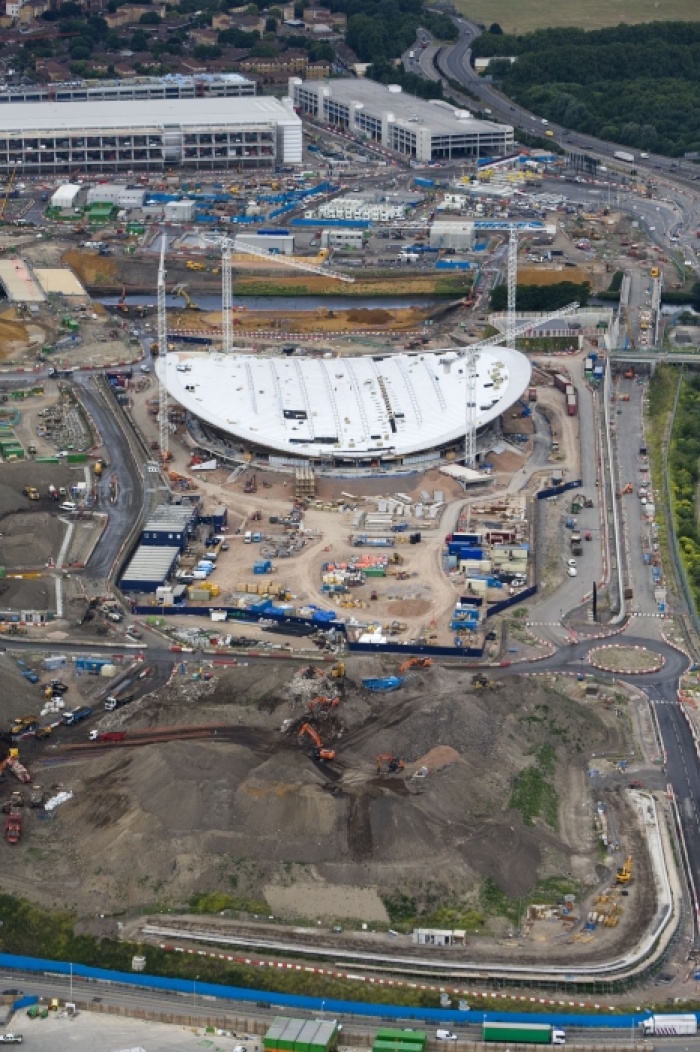
Sustainable Construction Photos at the 2012 Olympics

As London prepares to host the Summer Olympic Games of 2012, recent construction photos share the progress being made in this sustainable project.  This sustainable planning and construction project will develop an area that is economically depressed to provide for the community for many decades after the 2012 Olympic Games are over.  Photos courtesy of london2012.co.uk

Velo Park

Aquatic Center

Olympic Village

Source: http://www.sustainableconstructionblog.com/construction/sustainable-construction-photos-at-the-2012-olympics

electrician Columbia VA electrician in Columbia VA Columbia electrician electrician Columbia electrician in Columbia

Monday, August 20, 2012

How Long Does a Contractor Have to File a Claim Against the Government?

By: Edward T. DeLisle & Maria L. Panichelli

Many contractors know that there is a six-year statute of limitations on claims brought under the Contract Disputes Act (“CDA”) and Section 33.206 of the Federal Acquisition Regulations (“FAR”). However, most contractors incorrectly assume that for claims pertaining to delay, or acceleration, the six-year statutory period begins to run only upon project completion or at some point in close proximity to completion, when the contractor is able to more accurately quantify its loss. This assumption is incorrect and can have severe consequences: once the limitations period expires, a claim is forever waived. As such, it is critically important to accurately assess the time at which the six year limitations period begins to run.

Pursuant to the CDA and the FAR, a claim must be submitted to the Contracting Officer within six years of the date upon which that claim “accrues.” Accrual occurs when all events that fix liability are known, or should be known, by the contractor. For liability to be fixed, an injury, or some type of impact or harm, must have occurred. However, monetary damages need not have been incurred, or do not have to be known, for accrual of a claim to take place (See FAR § 33.201). As such, events that result in delay, or acceleration, are likely to occur well before project completion, especially on large, complex projects and, even though the extent of the harm may not be known at that time, a “claim” has been born. To most contractors, this is rather counterintuitive -- it seems almost nonsensical to require a contractor to pursue, or even certify, a claim before a project is complete and the full range of excess costs are known. While this might be true, courts and agency review boards regularly rule against contractors who wait too long to assert a claim and attempt to make such an argument. (E.g. In Re Robinson Quality Constructors, ASBCA No. 55784, 09-1 B.C.A. (CCH) ¶ 34048 (Jan. 6, 2009)).

Contractors have attempted to argue that the six-year limitations period should be “equitably tolled” based on government misconduct. Equitable tolling essentially means that the limitations period stops running based upon issues of fairness. Historically, these arguments have been premised on the notion that the clock should stop ticking if a litigant can establish: (1) that he had been pursing his rights diligently; and (2) that some extraordinary circumstance stood in his way that was not his fault. (E.g. Arctic Slope Native Association, Ltd. v. Sebelius, 583 F.3d 785, 798 (Fed Cir. 2009); Menominee Indian Tribe of Wisconsin v. United States, 2012 WL 192815 (D.D.C. 2012)). However, in a recent opinion, the United States Court of Appeals for the Federal Circuit held that 28 U.S.C. § 2501 (the statutory provision defining the CDA’s limitations period) creates an absolute bar of any claim submitted beyond 6 years, if that claim is pursued in the United States Court of Federal Claims (“CFC”), thereby eliminating the equitable tolling argument in that forum. FloorPro, Inc. v. United States, 2012 WL 1948997 (May 31, 2012). While other opinions suggest that the CDA’s statute of limitations might, nonetheless, be subject to equitable tolling if the contractor’s claim is pursed before an agency or board of contract appeals (see, e.g. Arctic Slope, supra), the CFC is often viewed as a more favorable forum. Therefore, contractors should, if at all possible, avoid triggering the limitations bar, which would preclude adjudication of their claim before the CFC. This can only be accomplished if the contractor acts promptly and accurately determines when liability was “fixed.”

Accurately assessing when a party’s liability becomes “fixed” in relation to a claim can involve a complicated analysis, and is very fact specific. Accordingly, contractors should track any increased costs as they are incurred, and seek professional advice as soon as it appears that there is a basis for a claim, regardless of when the project may attain completion.

Edward T. DeLisle is a Partner in the firm and a member of the Federal Contracting Practice Group. Maria L. Panichelli is an Associate in the firm’s Federal Practice Group.

Source: http://feeds.lexblog.com/~r/FederalConstructionContractingBlog/~3/SSaILh_WWsA/

electrician in Columbia VA Columbia electrician electrician Columbia electrician in Columbia electrician Columbia VA